Detailed Description
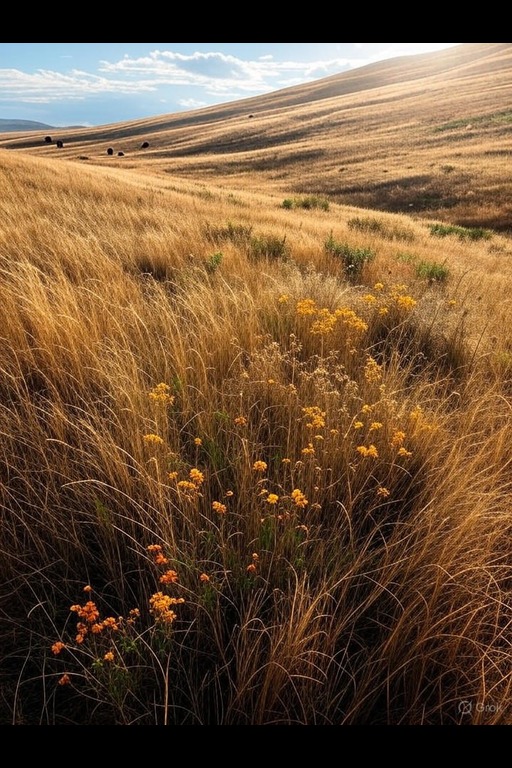
Temperate dry grasslands are vast, open landscapes where the horizon stretches endlessly, punctuated only by the occasional hill or cluster of trees. The grasses here sway gently in the wind, creating a golden sea that glimmers under the sun. These grasslands support a diverse array of plant life, including resilient perennials that have adapted to the dry conditions, often featuring deep root systems to access moisture from the soil. Wildflowers bloom sporadically, adding splashes of color to the otherwise muted palette, especially during the rainy seasons when the landscape comes alive with vibrant hues.
The climate of temperate dry grasslands exhibits a marked seasonal variation, with hot summers and cold winters. In the summer, the sun beats down relentlessly, and the grass may turn brown and brittle, while in winter, the landscape is often blanketed in frost or snow, creating a stark beauty. This seasonal shift influences the wildlife that inhabits these areas, as many species migrate or hibernate in response to the changing temperatures and availability of food resources.
Animal life in temperate dry grasslands is diverse, ranging from small rodents that burrow into the earth to larger herbivores such as deer and antelope that graze on the grasses. Predators like foxes and hawks are often seen patrolling the open spaces, relying on their keen eyesight to spot prey. The interactions between these species create a balanced ecosystem, with each playing a vital role in maintaining the health of the grassland.
Traveling through these biomes can be a unique experience. Pathways are often marked by the trails of animals or the occasional worn path created by travelers seeking to navigate the expanse. Settlements are typically found near water sources, as these are precious in such arid environments. The architecture of these settlements is often designed to blend into the landscape, using local materials that keep inhabitants cool during the heat of summer and warm during the winter chill.
Overall, temperate dry grasslands are a testament to nature's resilience and adaptability, showcasing a rich tapestry of life that thrives despite the challenges of its environment. Their beauty and complexity make them an essential part of the world's ecological diversity.
Examples
The Great Prairie is a sweeping expanse of golden grasses, home to herds of bison that roam freely, grazing on the nutrient-rich plants. This vast landscape is dotted with wildflowers that bloom in spring, transforming the prairie into a vibrant tapestry of colors.
The Steppes of the East feature rolling hills and expansive fields, where the wind carries the scent of wild sage and the calls of birds echo across the open land. Here, nomadic tribes have adapted their lifestyles to the seasonal changes, moving in harmony with the land.
In the region known as the Dry Downs, the soil is rich and fertile, supporting a variety of crops between the natural grasses. Farmers have established small homesteads, utilizing traditional techniques to cultivate the land while preserving its natural beauty.
The Savanna Glades present a unique mix of grassland and scattered trees, providing habitat for both grazing animals and their predators. Seasonal rains transform the landscape, bringing life to the grasses and attracting migratory birds that fill the skies.
The High Plains are characterized by their elevation and cooler temperatures, where resilient grasses withstand the harsh winds. Here, small wildlife thrives, and the occasional herd of deer can be seen moving gracefully across the terrain, a testament to the adaptability of life in this biome.