Detailed Description
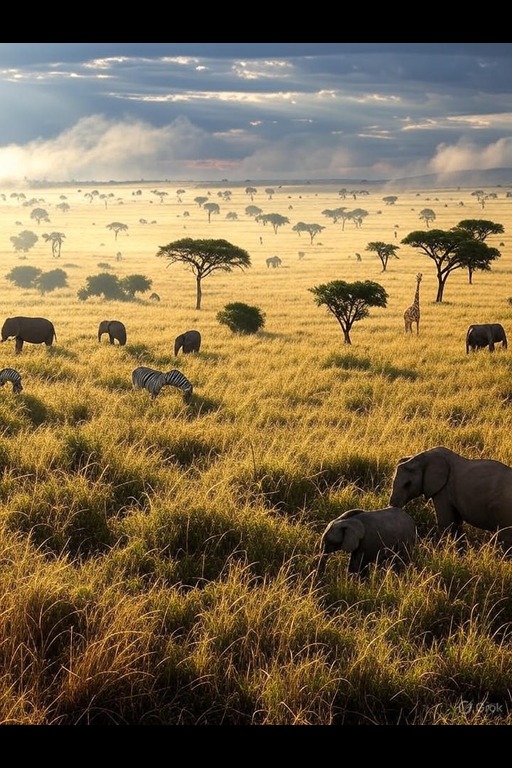
The savanna is defined by its expansive grasslands that stretch as far as the eye can see, often dotted with solitary trees like the iconic acacia or baobab. These trees provide essential shade and shelter for various creatures and are adapted to withstand the dry conditions that dominate the landscape. The open terrain allows for an unobstructed view of the horizon, where the golden grasses sway gently in the wind, creating a mesmerizing dance of colors under the sun.
The climate of the savanna is characterized by a distinct wet and dry season. During the rainy season, the landscape transforms as the grasses grow lush and green, attracting a plethora of herbivores such as antelopes, zebras, and elephants. Predators like lions and hyenas follow closely, taking advantage of the abundance of prey. The dry season, in contrast, brings a stark change; the grasses turn brown and brittle, forcing many animals to migrate in search of water and food, while others remain resilient, relying on the sparse resources available.
Flora in the savanna is adapted to the challenges of drought and fire, with many plants developing deep root systems to access underground moisture. Fire plays a crucial role in maintaining the savanna ecosystem, as it helps to clear out old growth, allowing new grasses to flourish. This cycle of renewal supports a vibrant community of insects, birds, and mammals, each playing a part in the intricate web of life.
Settlements in the savanna are often temporary, with nomadic tribes moving in sync with the seasonal migrations of wildlife. These communities build their homes using materials readily available in the environment, such as grass and mud, creating structures that blend seamlessly with the landscape. Travelers venturing through the savanna can find opportunities for trade with these tribes, who offer unique goods and services that reflect their deep connection to the land.
As dusk falls, the savanna comes alive with a symphony of sounds. The calls of nocturnal creatures fill the air, and the sky transforms into a canvas of stars. The sight of herds grazing peacefully under the moonlight encapsulates the serene beauty of this biome, making it a place of wonder and adventure for those who seek to explore its vast expanses.
Examples
The Golden Plains are a sweeping expanse of golden grasses, where herds of wildebeest roam in search of fresh pastures. This area is renowned for its vibrant wildlife and picturesque sunsets that paint the sky in hues of orange and purple.
The Whispering Acacia Grove is a serene area where ancient acacia trees stand tall, their leaves rustling softly in the breeze. It serves as a refuge for various birds and small mammals, providing shelter and sustenance within the savanna.
The Dry Riverbed, once a flowing stream, is now a cracked expanse of earth during the dry season. This landscape reveals the remnants of past rains, and the occasional pools of water attract wildlife, creating a focal point for predators and prey alike.
The Migratory Trail is a well-worn path used by countless animals during their seasonal journeys. Dust rises from the ground as they traverse this route, a testament to the life and movement that defines the savanna ecosystem.
The Festival of the First Rains is celebrated by local tribes in the savanna, marking the onset of the rainy season. Colorful decorations adorn their temporary shelters, and traditional dances echo through the air, harmonizing with the sounds of nature awakening after a long dry spell.