Detailed Description
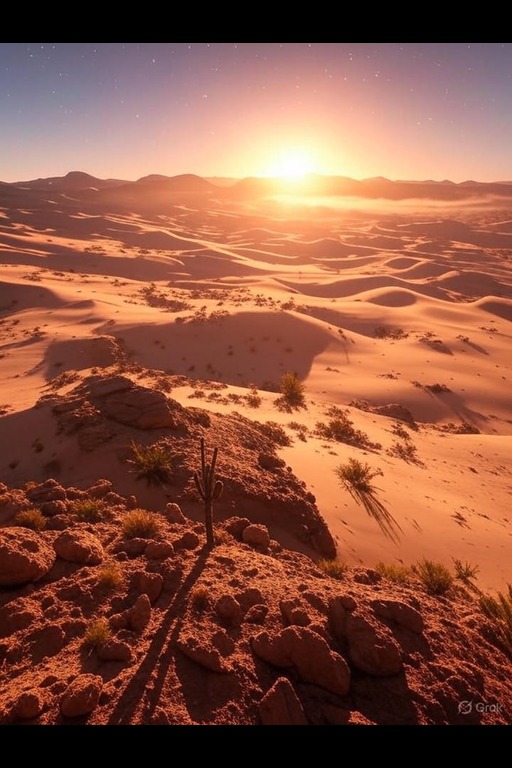
The hot desert biome presents a striking tableau of golden sands and rugged terrain, where the sun reigns supreme. Vast stretches of dunes rise and fall like waves, shifting with the winds, while rocky plateaus and canyons punctuate the landscape, creating a stark contrast to the smooth sands. The relentless heat during the day can be oppressive, with temperatures soaring to unbearable heights, forcing most creatures to seek shelter. As the sun sets, the desert transforms; the air cools dramatically, and the night sky reveals a tapestry of stars, unmarred by city lights.
Flora in hot deserts has evolved to endure the harsh climate. Cacti, with their thick, fleshy bodies, store water for long periods, while their spines provide protection from herbivores. Drought-resistant shrubs, like sagebrush, spread their roots wide and deep, tapping into underground moisture. These plants often bloom vibrantly after rare rainfalls, creating a stunning display of color against the muted earth tones of the desert. The ability of these species to survive in such an environment is a testament to nature's resilience and adaptability.
Fauna in the hot desert is equally remarkable, showcasing a variety of adaptations to cope with the extreme conditions. Reptiles, such as lizards and snakes, bask in the sun during the day, utilizing their cold-blooded nature to regulate body temperature. Many mammals, including rodents and foxes, have developed nocturnal habits, emerging under the cover of darkness to forage for food and water. Their burrows provide refuge from the scorching sun, while their keen senses alert them to potential predators. Birds, too, have adapted, often migrating to find food and water during the hottest months.
Human settlements in hot deserts are few and far between, often concentrated around oases or along ancient trade routes. These communities rely heavily on limited water sources and have developed unique architectural styles to cope with the heat, such as thick walls and shaded courtyards. Nomadic tribes may traverse the desert, following the seasonal patterns of flora and fauna, while traders transport valuable goods across the arid landscape, connecting distant lands. The rich tapestry of life in these deserts highlights the intricate balance between survival and the relentless forces of nature.
Examples
The Great Sand Sea is a vast expanse of shifting dunes, known for its breathtaking sunrises and sunsets. Travelers often find themselves lost in the undulating sands, where mirages play tricks on the eye and the heat can be blinding.
The Oasis of Mirath serves as a vital lifeline in the desert, surrounded by palm trees and fertile land. This lush area attracts a variety of wildlife and weary travelers seeking respite from the harsh environment.
The Sunscorched Plateau rises dramatically from the desert floor, offering breathtaking views of the surrounding landscape. Its rocky outcrops are home to hardy plants and small creatures that have adapted to the extreme conditions.
The Whispering Dunes are known for their haunting sounds, created by the wind sweeping across the sands. This eerie phenomenon draws adventurers and scholars alike, eager to uncover the secrets of the desert's natural music.
The Mirage Market is a bustling hub for traders and merchants, where goods from distant lands are exchanged. Set against the backdrop of the endless sands, this temporary settlement showcases the resilience of those who dare to thrive in the desert.