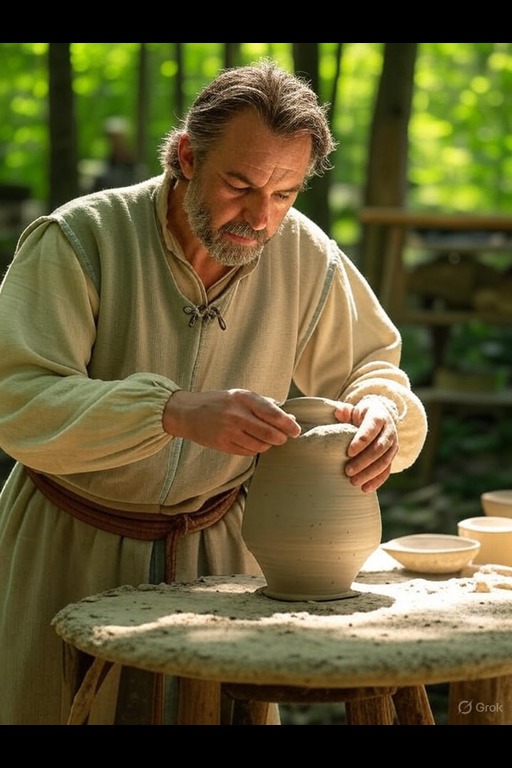
Ceramic pottery is a valuable resource often sourced from regions characterized by mild seasons and abundant clay deposits. Renowned for its versatility, it is favored by artisans and merchants alike, making it a sought-after commodity in trade networks. Market towns along well-traveled roads are known for their quality grading and safe transport of these goods. The craftsmanship involved in creating ceramic pottery adds to its allure, ensuring it commands favorable prices in local and distant markets.
Universal
Biomes
Politics
Alignments
Races
Resources
Classes
Elevations
Religions
World
No accessible MAPs found.
Biome
Politics
Alignment
Race
Resource
Class
HeightMap
Ceramic Pottery
Detailed Description
The production of ceramic pottery is deeply intertwined with the landscape of temperate deciduous forests, where clay beds are abundant and the climate supports the drying and firing of ceramics. Artisans in these regions often employ traditional techniques passed down through generations, shaping the clay into various forms such as vessels, plates, and decorative items. The natural resources available in these biomes, coupled with the artisans' skill, result in pottery that is both functional and aesthetically pleasing. The vibrant community of makers fosters a culture of innovation, enabling the development of unique styles and techniques that reflect their surroundings. Trade plays a pivotal role in the distribution of ceramic pottery. Market towns serve as bustling hubs where artisans showcase their wares alongside merchants who facilitate trade with distant lands. The transport of pottery is undertaken with great care, as its fragility necessitates protective packaging and thoughtful logistics. These towns often have established routes that connect to larger trade networks, ensuring that high-quality goods reach a wider audience. As pottery is traded, stories of its makers and the places it originates from travel with it, enriching the value of each piece. In addition to trade, ceramic pottery finds its place in various artisan crafts. Skilled artisans experiment with glazing techniques, incorporating local minerals and pigments to create distinctive finishes. This practice elevates the pottery from mere utility to a form of artistic expression, with each piece telling a story of its origin and creation. Beyond functional items, ornamental pieces often find their way into homes as decorative accents, displaying the craftsmanship and cultural identity of the makers. The continual demand for unique and high-quality pottery ensures that this resource remains integral to both trade and artistry.
Examples
Ceramic pottery encompasses a wide range of products, from everyday trade goods to intricate crafts and beautiful ornaments. Common items include bowls, jugs, and plates, which serve practical purposes yet often feature artistic designs. Additionally, elaborate figurines and decorative tiles showcase the artisans' skill and creativity, appealing to collectors and connoisseurs. Each piece reflects the region's cultural influences and artistic heritage, making ceramic pottery a cherished element in various settings.