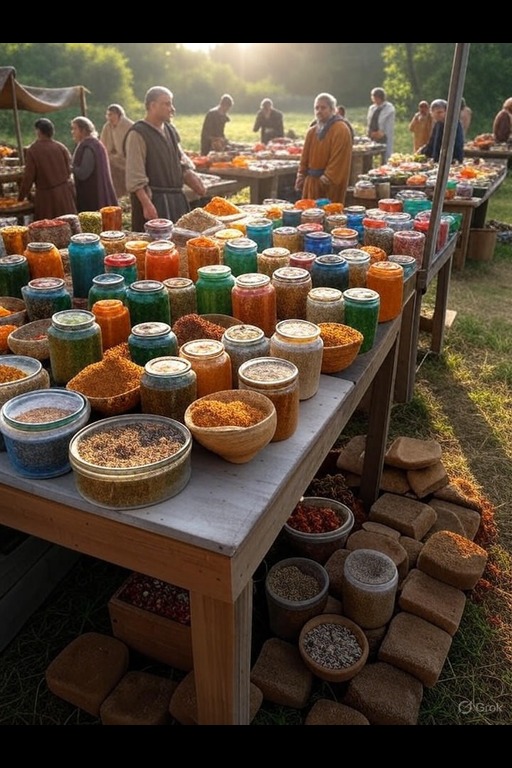
Exotic spices are highly prized ingredients sourced from regions characterized by open grasslands and diverse ecosystems. These spices are sought after by artisans, merchants, and culinary experts alike for their unique flavors and aromas. The trade in these spices flourishes in hubs where quality grading and safe transport are paramount. Whether used in cooking, brewing, or preservation, exotic spices command notable prices when available.
Universal
Biomes
Politics
Alignments
Races
Resources
Classes
Elevations
Religions
World
No accessible MAPs found.
Biome
Politics
Alignment
Race
Resource
Class
HeightMap
Exotic Spices
Detailed Description
Exotic spices, harvested from the vibrant and varied biomes of grasslands and forests, play a significant role in many industries. The unique environmental conditions of these regions contribute to the complex flavors and aromas that define these spices. They are often collected during brief harvest seasons when the spices reach their peak maturity, resulting in a bounty that can vary widely from year to year. The gathering of these spices is often a communal effort, involving skilled foragers who possess an intimate knowledge of the plants and their growth patterns. As these individuals navigate the open terrain, they also respect the delicate balance of the ecosystem, ensuring that their harvesting practices do not deplete the natural resources available to them. This careful stewardship is critical, for it helps maintain the integrity of the spices and their surrounding environment for generations to come. The culinary applications of exotic spices are vast and varied. They are used to enhance the flavors of a wide range of dishes, from savory to sweet, and their integration into traditional recipes often reflects the cultural practices of the regions they originate from. Beyond cooking, these spices find their way into the brewing of beverages, infusing them with complex notes that elevate the drinking experience. Many artisans experiment with these spices to create unique products such as glazes, liqueurs, and preserves, each showcasing the distinct characteristics of the spices used. The ability to combine various spices results in a multitude of flavor profiles, making it an art form that is appreciated by both creators and consumers alike. Trade networks that specialize in exotic spices have developed around their high demand. Merchants travel extensively, often through challenging terrains, to procure and transport these valuable goods. Trade hubs located in regions where these spices are abundant have become centers of exchange, where quality grading is performed meticulously to ensure that only the finest products reach markets. This attention to detail in the trade process fosters a reputation for excellence, attracting buyers willing to pay a premium for authenticity and quality. As such, the allure of exotic spices continues to thrive, captivating those who seek the extraordinary in their culinary endeavors.
Examples
Common products derived from exotic spices include exotic spices glaze, which enhances both flavor and visual appeal of dishes, and exotic spices liqueur, a delightful beverage that captures the essence of these flavors. Additionally, exotic spices preserves offer a way to enjoy the unique taste of these spices long after their harvest season has passed. Each of these products reflects the skill and creativity of artisans who seek to transform these raw materials into something extraordinary. The versatility of exotic spices ensures they remain a staple in kitchens and markets alike.