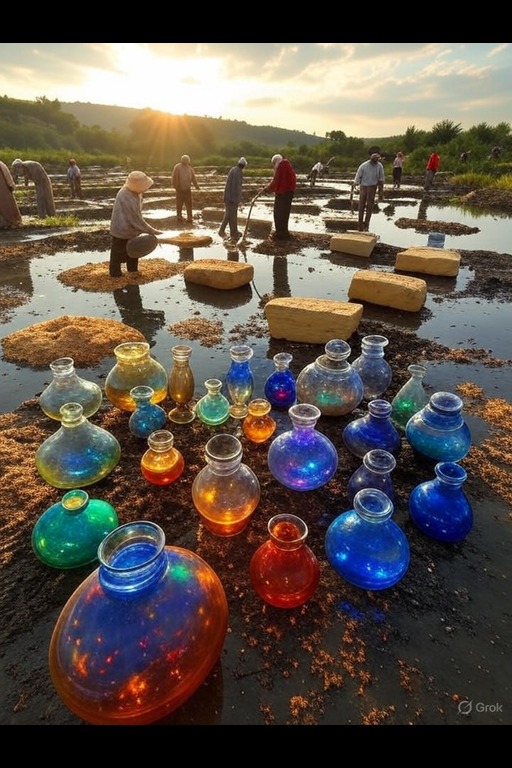
Phosphate Sediments is a mineral resource commonly found in wetland environments, characterized by its rich deposits collected from waterlogged beds and terraces. This versatile material can be quarried or scooped, leading to the separation of blocks and fines for various applications. While larger blocks are often utilized in construction, finer materials can be processed for glass and ceramics. The extraction of phosphate sediments supports several industries, including quarrying, construction, and trade.
Universal
Biomes
Politics
Alignments
Races
Resources
Classes
Elevations
Religions
World
No accessible MAPs found.
Biome
Politics
Alignment
Race
Resource
Class
HeightMap
Phosphate Sediments
Detailed Description
Found in the depths of marshes and along the banks of rivers, phosphate sediments are the result of natural sedimentation processes in wetland ecosystems. Over time, organic materials decompose while minerals accumulate, creating rich deposits that are both nutrient-dense and valuable for human use. These sediments are typically harvested through a combination of quarrying techniques and manual scooping, ensuring that both large blocks and finer materials are retrieved for different end uses. The extraction process often involves careful consideration of the environmental impact, as the delicate balance of wetland habitats is essential for maintaining biodiversity and ecological health. The larger blocks of phosphate sediments are prized in the construction industry. These substantial pieces are often cut and shaped for use in building structures, providing a strong, durable option suitable for various architectural needs. The versatility of the material allows it to be employed in foundations, walls, and decorative elements, lending both strength and aesthetic appeal. Meanwhile, the finer sediments undergo processing, often being fired or melted to create glass and ceramics. This transformation highlights the adaptability of phosphate sediments, as they can be used to produce everything from utilitarian items to intricate works of art. Trade plays a significant role in the phosphate sediments industry, as these materials are highly sought after in regions lacking local deposits. The movement of phosphate sediments across distances fosters economic connections between different areas, allowing for the exchange of goods and resources. As such, the trade of phosphate-based products contributes to the development of various markets, bolstering local economies and supporting industries reliant on these materials. Through quarrying and processing, phosphate sediments yield a diverse array of products, ultimately enhancing the material landscape of construction and artistry alike.
Examples
Phosphate Sediments give rise to numerous products that serve essential functions in everyday life. Cut stone from these sediments is widely used for building, while the transformation into glass and ceramics enables the creation of functional and decorative items. Beyond construction, phosphate-based trade goods circulate between communities, supporting economic vitality. These materials, derived from wetland environments, thus showcase the intersection of nature and industry, reflecting both the resource's utility and its importance in various applications.