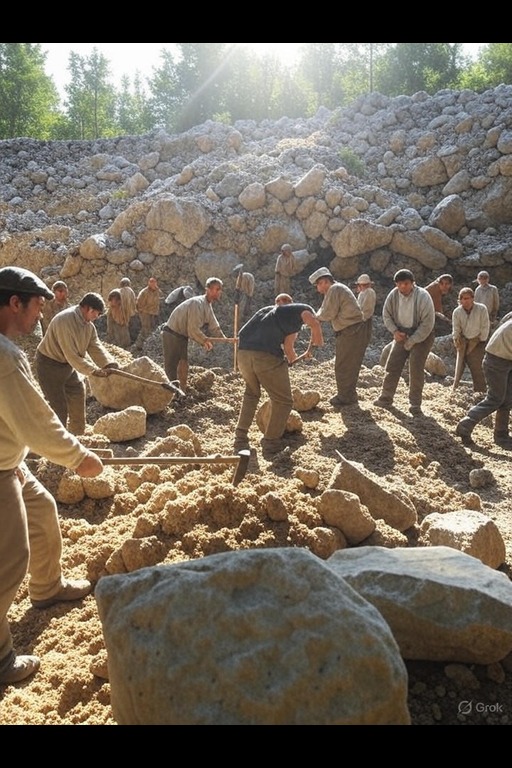
Phosphate Rock is a vital mineral resource commonly extracted from extensive beds and terraces found in various landscapes. Its versatility allows for a wide range of applications, from construction materials to glass and ceramics. The extraction process often involves quarrying or scooping, followed by meticulous separation of blocks and fines. This mineral is crucial for industries that rely on sturdy foundations and innovative design in their creations.
Universal
Biomes
Politics
Alignments
Races
Resources
Classes
Elevations
Religions
World
No accessible MAPs found.
Biome
Politics
Alignment
Race
Resource
Class
HeightMap
Phosphate Rock
Detailed Description
The extraction of Phosphate Rock typically occurs in lush, tropical seasonal forests or expansive taiga regions, where geological formations yield rich deposits. Quarrying operations excavate these layered deposits, employing techniques that minimize environmental disruption while maximizing yield. Workers often scoop the mineral from exposed surfaces or utilize more complex machinery to access deeper beds. The extracted rock is then sorted, with larger blocks reserved for robust construction purposes and finer materials processed for other applications. In the construction industry, Phosphate Rock is transformed into cut stone, providing durable and aesthetically pleasing options for builders and architects. Its inherent strength makes it an attractive choice for foundational work and structural integrity in various projects. Meanwhile, the finer particles often undergo further processing, being heated or melted to produce glass, ceramics, and cement. This versatility not only broadens the scope of its use but also enhances the overall quality of the final products, ensuring they meet rigorous industry standards. The trade of Phosphate Rock spans continents, as its demand transcends local markets. Artisans and manufacturers alike value the material for its reliability and adaptability. In the realm of ceramics, for instance, it is indispensable in creating high-fired stoneware, where its chemical properties contribute to the final product's strength and finish. Similarly, the glass industry utilizes it to develop various glass types, enhancing clarity and durability. The interconnectedness of these industries illustrates the mineral's integral role in the broader economic framework, as it continues to facilitate trade and innovation across regions.
Examples
Examples of products derived from Phosphate Rock include cut stone utilized in construction, high-quality glass crafted for numerous applications, and ceramics that combine functionality with artistic design. Additionally, cement production relies heavily on this mineral, as it forms a critical component of concrete mixtures. Trade goods originating from Phosphate Rock often circulate widely, highlighting its significance as a resource in both local and international markets.