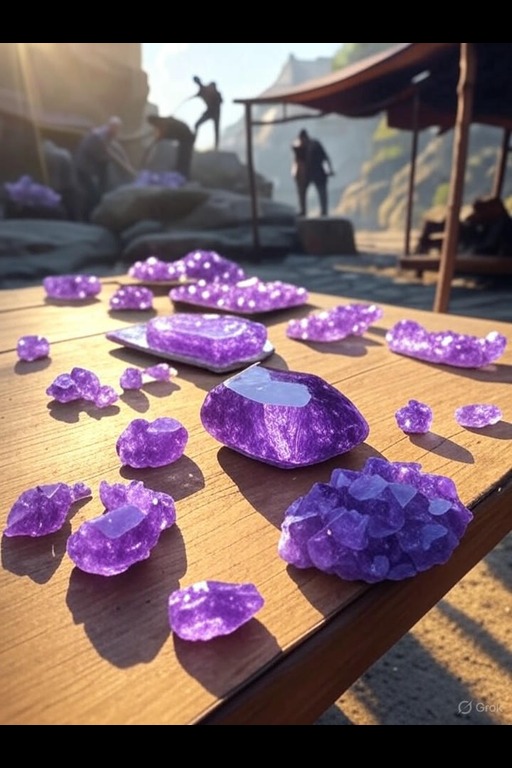
Amethyst is a striking mineral characterized by its rich purple hues, formed over millennia in geological processes. Found in diverse biomes, including savannas and wet forests, it captivates those who seek its beauty. Miners and artisans alike value these deposits for crafting exquisite items and for trade. Extraction, however, often presents challenges due to the mineral’s hardiness and the rugged terrains where it is located.
Universal
Biomes
Politics
Alignments
Races
Resources
Classes
Elevations
Religions
World
No accessible MAPs found.
Biome
Politics
Alignment
Race
Resource
Class
HeightMap
Amethyst
Detailed Description
The formation of amethyst occurs through the crystallization of silica-rich solutions, often within volcanic rocks or as deposits in sedimentary layers. This mineral is known for its vibrant purple color, which can range from a gentle lavender to a deep violet. The variations in hue are influenced by the presence of trace elements, particularly iron, and the conditions under which the mineral crystallizes. The gem's allure has made it a sought-after material for various industries, primarily jewelry and enchanting practices, where it is believed to enhance both aesthetics and function. Amethyst is harvested from veins that can be found in various biomes, including temperate grasslands and tropical forests. Miners often venture into harsh environments, facing both natural hazards and competition from other resource seekers. The extraction process generally involves careful excavation to minimize damage to the unique crystalline structures. Once extracted, the mineral is refined and polished, transforming rough pieces into stunning gemstones suitable for adornment and ritualistic items. Its use extends beyond mere decoration; artisans craft amulets, wands, and other implements intended for both aesthetic pleasure and practical applications. In terms of its application, amethyst is frequently utilized to create an array of products, including rings, amulets, and talismans. Each crafted piece often reflects the skill and artistry of its maker, with intricate designs that highlight the natural beauty of the mineral. Due to its durability and visual appeal, amethyst is also favored in the field of alchemy, where it may be fashioned into various tools and vessels. Furthermore, its significance in trade cannot be overlooked, as it serves as a valuable currency among merchants and adventurers alike, transcending simple economic exchanges to become a symbol of wealth and status.
Examples
Amethyst can be found in a variety of crafted items, each showcasing its unique beauty. Jewelry such as rings and necklaces often highlight the mineral's vibrant colors, captivating the attention of wearers and admirers. Artisans also create enchanted orbs and wands, incorporating the mineral into their magical practices. Additionally, amethyst talismans are crafted for protective and decorative purposes, signifying the mineral's versatility in both aesthetic and functional realms.