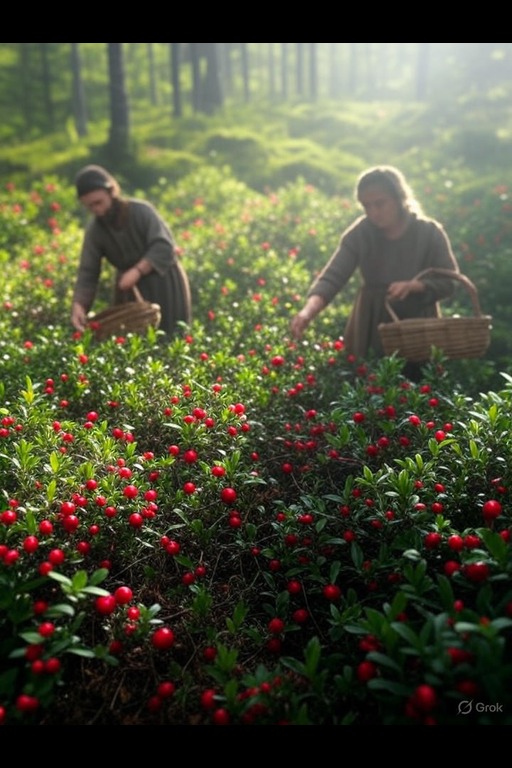
Lingonberries are small, tart fruits that thrive in the cool, temperate climates of taiga biomes. These wild berries are typically gathered from low-lying shrubs during the late summer months. Harvesting requires minimal tools, as foragers can often pluck them directly from the branches. The berries are carefully sorted to ensure that only the finest specimens are collected, leaving any subpar fruit to contribute to the local ecosystem.
Universal
Biomes
Politics
Alignments
Races
Resources
Classes
Elevations
Religions
World
No accessible MAPs found.
Biome
Politics
Alignment
Race
Resource
Class
HeightMap
Lingonberries (Wild)
Detailed Description
The gathering of wild lingonberries is a seasonal activity deeply intertwined with the natural rhythms of the taiga. The berries grow abundantly under the dappled sunlight filtering through the dense canopy, often found carpeting the forest floor or nestled among the underbrush. Foragers, equipped with simple baskets or containers, navigate the soft moss and fallen leaves, searching for the bright red fruit that stands out against the greenery. The distinct, slightly bitter flavor of lingonberries makes them a sought-after resource for various uses, from culinary applications to crafting materials. Sorting the lingonberries is an important step in the gathering process. Only those that are plump and unblemished are selected for further use, ensuring that the quality is maintained. The discarded berries, while not suitable for trade or crafting, play a crucial role in maintaining the biodiversity of the area. They serve as sustenance for local wildlife and contribute to the ongoing life cycle of the taiga ecosystem. This practice highlights the importance of sustainable harvesting methods that respect both the resource and the environment. Beyond their culinary appeal, wild lingonberries find their place in various industries. Craftsmen utilize the vibrant color and tart flavor in the creation of goods such as jams, jellies, and beverages. Their natural properties make them suitable for use in traditional remedies and homeopathic applications as well. Additionally, the berries are sometimes processed into dyes, adding to their versatility. In trade, lingonberries are valued for their unique taste and are often exchanged for other goods, fostering connections between communities. Their demand can fluctuate based on seasonal yields and regional preferences, making them an important commodity for those who engage in commerce. The berries also serve as a symbol of the changing seasons, marking the transition from the lush greenery of summer to the crispness of autumn, and they remain a cherished part of the cultural tapestry that weaves through life in the taiga.
Examples
Lingonberries are transformed into an array of products that reflect their adaptability. Craft goods such as preserves and sauces are popular, providing a sweet and tangy flavor that enhances many dishes. In construction, the berries' juice can serve as a natural dye for wooden materials, imparting a rich hue. Additionally, they are often traded as raw goods, exchanged for tools and other necessary items, making them a linchpin in the local economy. The resource thus underscores the harmony between nature and human innovation.