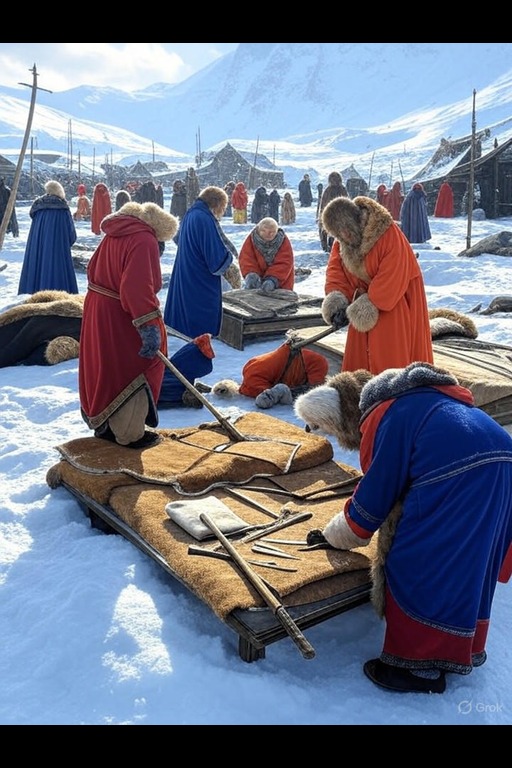
Seal skins are a valuable resource found in polar desert regions, harvested for their durability and insulation. Skilled gatherers work during specific seasons to ensure sustainable practices that do not deplete local populations. The pelts support various crafts and facilitate trade, establishing nearby settlements that benefit from their proximity to reliable sources. Culinary industries also utilize seal skins in the preparation and preservation of various goods.
Universal
Biomes
Politics
Alignments
Races
Resources
Classes
Elevations
Religions
World
No accessible MAPs found.
Biome
Politics
Alignment
Race
Resource
Class
HeightMap
Seal Skins
Detailed Description
In the harsh expanses of the polar desert, seal skins emerge as a vital resource, owing to the adaptability and resilience of the seals inhabiting these frigid waters. Harvesting seal skins requires not only precise timing but also a deep understanding of local wildlife patterns and seasonal changes. The pelts, known for their remarkable insulation properties, serve multiple purposes, ranging from clothing to crafting tools, ensuring that communities can withstand the extreme cold and thrive in their environment. The practice of harvesting is steeped in tradition, passed down through generations, emphasizing respect for nature and sustainable use to prevent depletion of seal populations. Gatherers venture onto the ice, often utilizing small boats or sleds depending on the time of year. The process demands a high level of skill, as hunters must approach seals with care to avoid startling them. Once a seal is successfully harvested, the skin is meticulously prepared. The preparation involves careful removal to ensure the integrity of the hide, followed by curing methods that enhance durability. The resulting seal skins are not only prized for clothing and insulation but are also integral to various forms of local craftsmanship, including bags, blankets, and decorative items that reflect the artistry of the communities. The economic significance of seal skins cannot be overstated. Local craftspeople create a diverse array of products that are highly sought after in trade, such as dried goods and preserves that utilize seal fat in their preparation. Spices and salts are often combined with these goods to enhance their flavor and preservation, creating a local culinary tradition that speaks to the resourcefulness of the inhabitants. The demand for seal skin products extends beyond local markets, fostering trade networks that connect remote settlements to larger trading hubs. As such, these skins form a vital component of the local economy and cultural identity, shaping the ways in which communities interact both within and beyond their borders.
Examples
Seal skins are utilized in a variety of products that reflect both practical needs and artistic expression. Common examples include intricately crafted bags that showcase local designs, as well as warm garments suited for the extreme climates. Culinary uses feature prominently as well, with preserved seal fat enriching dishes and enhancing flavors. Additionally, trade packs filled with seal-based goods are often exchanged during seasonal markets, further cementing the importance of this resource in local economies.