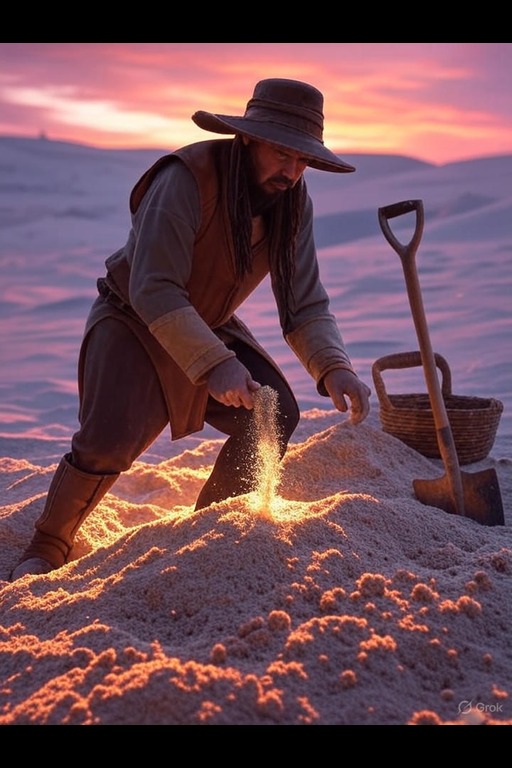
Windblown Sand and Gravel is an essential resource found naturally in subpolar and polar desert environments. Its collection requires skill and an understanding of seasonal patterns to prevent overharvesting. This material serves as a foundation for local industries, particularly in crafting and trade. Settlements often flourish near abundant sources, where the sand and gravel contribute to various economic activities.
Universal
Biomes
Politics
Alignments
Races
Resources
Classes
Elevations
Religions
World
No accessible MAPs found.
Biome
Politics
Alignment
Race
Resource
Class
HeightMap
Windblown Sand/Gravel
Detailed Description
Windblown Sand and Gravel forms through the relentless action of winds in arid climates, sculpting the landscape and creating expansive dunes and gravel beds. The constant movement of particles results in a unique blend that varies in texture and composition, often reflecting the surrounding environment. Harvesting this material is not merely a matter of gathering; it demands familiarity with the local climate and an acute awareness of ecological balance. Overharvesting can lead to erosion and depletion, prompting a reliance on traditional practices that ensure sustainable extraction methods. As such, the skill of the gatherer is vital, as they must navigate the shifting sands to find the richest deposits while minimizing impact on the ecosystem. In trade, Windblown Sand and Gravel serves multiple purposes. Artisans utilize it to create various products, from decorative items to functional tools. The texture and quality of the sand determine its suitability for specific crafts, with finer grains preferred for delicate applications and coarser particles used in more robust constructions. Additionally, the resource plays a significant role in culinary practices; when combined with local ingredients, it can enhance flavors and textures in a range of dishes. Preserves and dried goods often incorporate elements of Windblown Sand and Gravel, adding both character and a unique finish that is sought after by connoisseurs. Settlements that thrive on the collection and trade of Windblown Sand and Gravel become vibrant hubs of activity. Markets bustle with vendors showcasing their wares, from intricately crafted items to flavorful culinary pieces that draw in travelers. The availability of this resource not only supports local economies but also fosters cultural exchange, as artisans and traders share techniques, recipes, and stories inspired by their environmental interactions. The significance of Windblown Sand and Gravel extends beyond its material properties; it is a testament to the resilience and adaptability of communities in harsh climates, forging connections between people and their landscapes.
Examples
Various products arise from the utilization of Windblown Sand and Gravel, each reflecting its versatility. Dried goods crafted using this resource often feature unique textures that enhance the overall culinary experience. Preserves made in conjunction with local fruits and spices gain a distinctive finish, while trade packs filled with these items support regional commerce. Additionally, salts and spices infused with the essence of the landscape are celebrated for their flavor profiles, adding an authentic touch to dishes prepared by local chefs.