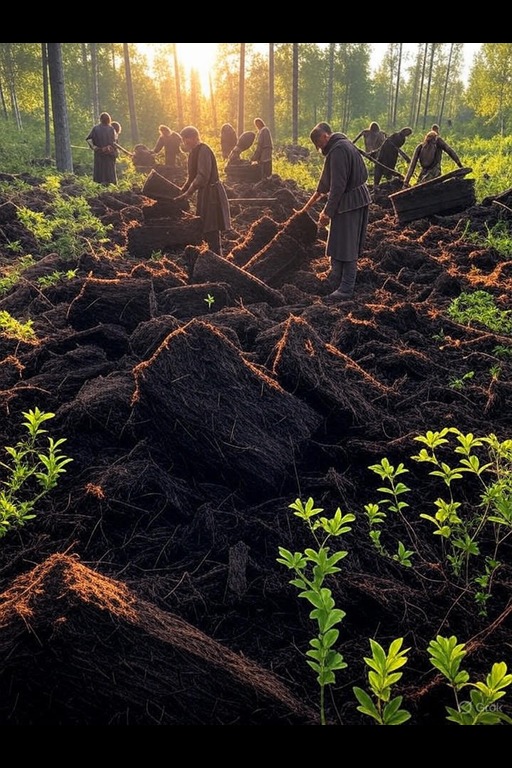
Peat (Dry) is a naturally occurring resource found in Boreal dry forest biomes. This dense, organic material forms from partially decomposed plant matter and is vital for various local industries. Harvesters adeptly gather it, taking care to maintain ecological balance and ensure sustainable supplies. It serves as an essential component in crafts, trade, and local economies, with many communities established near abundant sources of this resource.
Universal
Biomes
Politics
Alignments
Races
Resources
Classes
Elevations
Religions
World
No accessible MAPs found.
Biome
Politics
Alignment
Race
Resource
Class
HeightMap
Peat (Dry)
Detailed Description
Peat (Dry) is a form of organic matter that accumulates in waterlogged, anaerobic conditions, particularly within the cool, damp environments of Boreal dry forests. Over time, plant debris undergoes a slow decomposition process, resulting in a fibrous, dark material that retains significant moisture. The formation of peat is a gradual process, relying heavily on the local climate and plant life, which influence its density and composition. Harvesting this resource requires skilled knowledge of the seasonal cycles and the health of the peatland ecosystem, as overexploitation can lead to irreversible damage and depletion of stocks. The uses of dry peat are diverse and wide-ranging, beginning with its application as a fuel source. When dried, peat ignites easily and burns steadily, making it a favored choice for heating and cooking in many settlements. The energy content of dry peat rivals that of some traditional firewood, offering a more accessible option for communities located in remote areas. Beyond its role as a fuel, dried peat is also valued as a soil amendment, enriching the earth with organic matter and improving moisture retention for agricultural endeavors. It can be mixed into soil to enhance fertility, playing a crucial role in local farming practices. Craftsmen and artisans frequently utilize peat in various forms, creating products such as peat bricks and charred peat, which serve both practical and decorative purposes. Peat ash, a byproduct of combustion, finds its place in the production of certain goods, contributing unique properties to the materials in which it is incorporated. Furthermore, the trading of dry peat has become an integral part of local economies, with exchanges fostering connections between communities and encouraging the sustainable management of resources to ensure continued availability for future generations.
Examples
Common products derived from dry peat include peat bricks, which are compacted for use in heating, and fuel bundles that provide easy-to-handle energy for cooking. Soil mixes containing peat enhance garden beds and agricultural plots, promoting healthier plant growth. Charred peat is often employed in crafts, adding a distinctive texture and scent to various handmade items. Each of these products highlights the adaptability and significance of dry peat within local economies and lifestyles.