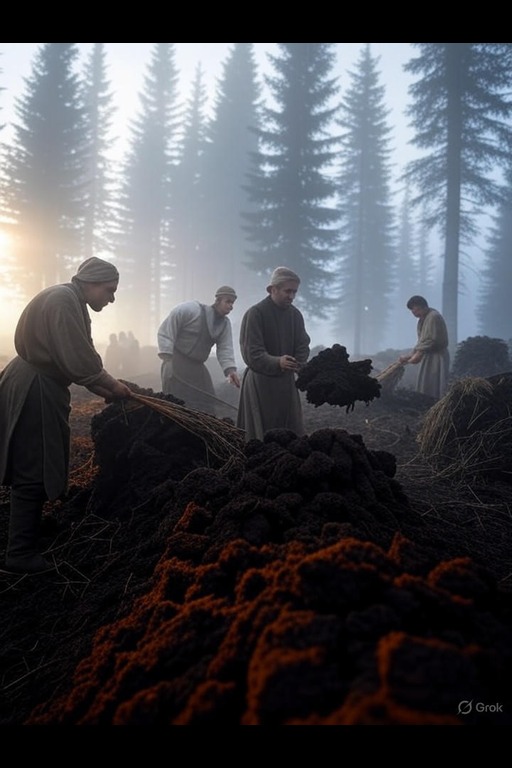
Peat (Forest) is a naturally occurring resource found in temperate coniferous forests, formed from the accumulation of partially decayed plant material in waterlogged conditions. This organic material is harvested by skilled gatherers who carefully manage the extraction process to prevent depletion of local stocks. It serves multiple purposes, including as a valuable fuel source and a soil amendment that enhances the fertility of agricultural lands. Many settlements thrive in proximity to abundant peat resources, fostering local craft and trade industries.
Universal
Biomes
Politics
Alignments
Races
Resources
Classes
Elevations
Religions
World
No accessible MAPs found.
Biome
Politics
Alignment
Race
Resource
Class
HeightMap
Peat (Forest)
Detailed Description
The formation of peat (forest) is a slow process, taking place over many seasons as organic matter accumulates in wet, acidic environments. The unique conditions of temperate coniferous forests, characterized by cool temperatures and consistent moisture, create an ideal habitat for the development of this resource. As layers of plant material build up, they become compressed over time, trapping carbon dioxide and contributing to the ecological balance of the region. Harvesters, knowledgeable about the seasonal cycles and the delicate nature of peat ecosystems, engage in sustainable practices to ensure that their activities do not lead to degradation. This practice not only preserves the resource but also maintains the biodiversity of the forest floor, which is essential for various flora and fauna that depend on it for survival. The uses of peat are diverse and significant. In many communities, it is primarily valued as a fuel source, with harvested peat being compacted into bricks or bundles that burn with a steady heat. This fuel is favored for its ability to provide warmth during colder seasons, making it a staple in many households. Additionally, peat's high organic content makes it an excellent soil amendment, enriching garden beds and agricultural plots with nutrients that promote healthy plant growth. The process of mixing peat with soil can enhance moisture retention, making it particularly beneficial for crops in drier periods. Beyond these direct applications, peat is also utilized in various trade goods, such as peat ash, which can be used in construction or as an ingredient in certain artisanal crafts. The economic implications of peat harvesting extend beyond local communities. The trade of peat and peat products has fostered connections between different regions, allowing for the exchange of goods and services that enrich the cultural landscape. Furthermore, as global interest in sustainable practices grows, the management of peat resources is increasingly viewed through the lens of environmental stewardship. Responsible harvesting techniques and the promotion of peat as a natural resource are vital for ensuring that its benefits can be enjoyed by future generations, making the relationship between human activity and the natural ecosystem a crucial point of study and consideration.
Examples
Examples of peat products include peat bricks, which serve as a reliable and effective source of fuel, and peat ash, which can be used in a variety of construction applications. Additionally, fuel bundles made from compacted peat provide an easy-to-store option for warmth during harsh seasons. Soil mixes incorporating peat enhance the growth potential of local gardens and farms, while charred peat offers unique qualities for specialized uses. Each of these products showcases the versatility and importance of peat as a resource in temperate coniferous forest ecosystems.