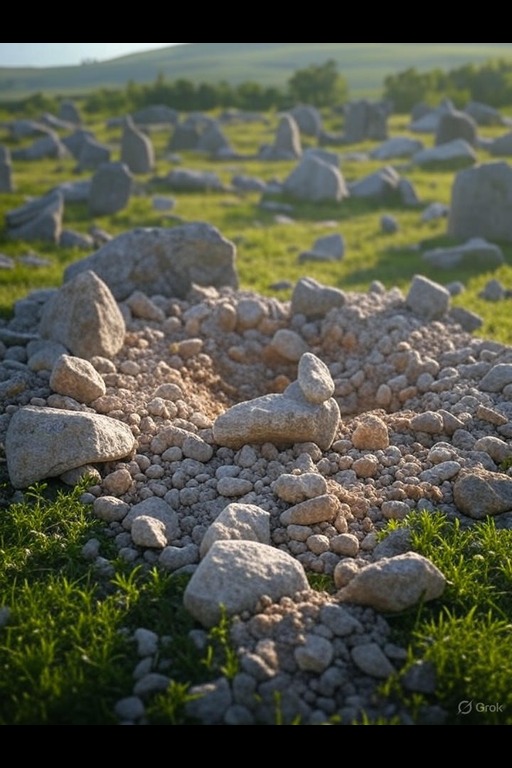
Granite Fieldstones are a robust resource commonly found in temperate dry grasslands. Their durability makes them a preferred choice for various industries, particularly masonry and sculpting. Harvesting these stones requires skill and knowledge of seasonal patterns to ensure sustainable collection. Settlements often flourish around abundant deposits, facilitating local craftsmanship and trade.
Universal
Biomes
Politics
Alignments
Races
Resources
Classes
Elevations
Religions
World
No accessible MAPs found.
Biome
Politics
Alignment
Race
Resource
Class
HeightMap
Granite Fieldstones
Detailed Description
Granite Fieldstones are formed from the slow crystallization of magma beneath the Earth's surface, resulting in a dense and durable material. This stone is favored for its strength and aesthetic qualities, often featuring a speckled appearance due to mineral inclusions. In temperate climates, these fieldstones can be found scattered across grasslands and forested areas, where natural erosion has exposed their surfaces. Harvesters venture into these landscapes, skilled in identifying the best locations to extract the stones while ensuring that they do not deplete the resources available. Understanding the seasonal shifts is crucial, as certain times of the year yield better conditions for harvesting without damaging the local ecosystem. Craftsmen utilize Granite Fieldstones for a variety of applications. In masonry, they are shaped into cut blocks that serve as foundational elements for buildings, offering stability and resilience against the elements. Sculptors often transform these stones into intricate works of art or functional items such as statues and grindstones, showcasing the material’s versatility. Additionally, the smaller fragments of Granite Fieldstones are processed into gravel and paving stones, essential for constructing pathways and roads in settlements. The trade of these products supports local economies and encourages community development, as artisans and merchants come together to exchange their goods. The significance of Granite Fieldstones extends beyond mere utility; they embody a connection to the landscape and the craftsmanship of the people who work with them. The presence of these stones influences settlement patterns, with many communities emerging near reliable sources, fostering a sense of identity rooted in the natural resources. As such, the harvesting and use of Granite Fieldstones reflect a balance between human activity and environmental stewardship, emphasizing the importance of sustainable practices in resource management.
Examples
Craftsmen produce a wide range of items from Granite Fieldstones, including meticulously cut blocks used in construction and sturdy grindstones essential for sharpening tools. Sculptors also carve detailed statues that capture the essence of local wildlife or historical figures from the stone. Smaller pieces of granite are often processed into gravel for paths and roads, while larger slabs may be polished into elegant paving stones for public squares. These products not only serve functional purposes but also enhance the aesthetic appeal of various settings.