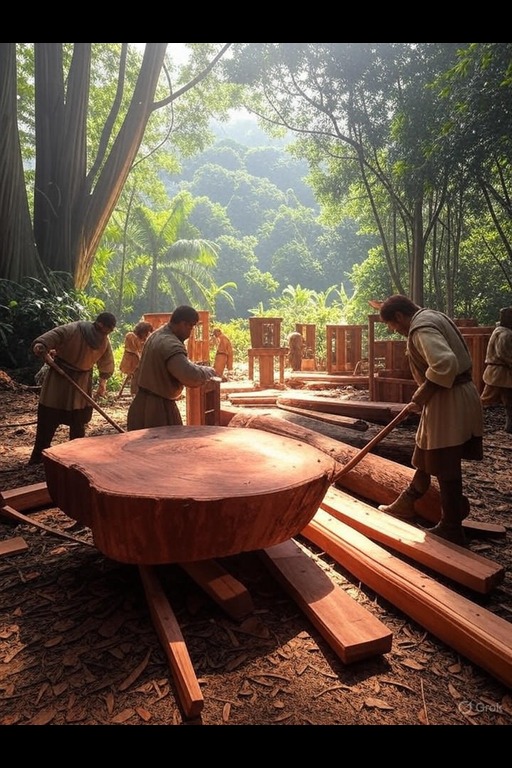
Mahogany Timber is a highly valued resource found primarily in tropical dry and wet forests, as well as seasonal and tropical rainforests. Its rich color and durability make it a preferred material for various applications, from construction to fine woodworking. Harvesting this timber requires a careful balance of skill and ecological awareness to ensure sustainability and the preservation of local ecosystems. Many communities thrive around the abundant sources of mahogany, relying on its trade to bolster their economies.
Universal
Biomes
Politics
Alignments
Races
Resources
Classes
Elevations
Religions
World
No accessible MAPs found.
Biome
Politics
Alignment
Race
Resource
Class
HeightMap
Mahogany Timber
Detailed Description
The allure of Mahogany Timber lies not only in its striking appearance but also in its remarkable physical properties. This hardwood is known for its deep, warm hues that range from rich reds to dark browns, often accompanied by a fine grain that lends itself beautifully to both functional and decorative uses. The density of mahogany provides strength, making it ideal for a variety of applications, including high-quality furniture, cabinetry, and architectural details. Craftsmen value mahogany not just for its aesthetic appeal but also for its workability, allowing for intricate designs and smooth finishes that enhance the beauty of the final product. Harvesting mahogany requires considerable skill and an understanding of local ecology. Experienced gatherers time their endeavors to coincide with seasonal growth patterns, ensuring that trees are neither overexploited nor allowed to regenerate fully. The sustainable management of mahogany resources is crucial; overharvesting can lead to diminished populations and impact the broader forest ecosystem. Communities often develop practices that emphasize selective logging to maintain tree health and forest density, recognizing that their livelihoods depend on the careful stewardship of these valuable trees. In addition to its use in construction and craftsmanship, mahogany timber plays a vital role in trade. Artisans and merchants seek this material to produce high-value products that can attract premium prices in local and distant markets. The versatility of mahogany means that it is not limited to planks and beams; it is also transformed into tools, implements, and even charcoal. Resin pitch extracted from mahogany trees further expands its utility, serving various purposes, including sealing and waterproofing. As such, the timber serves as a bedrock for both industry and community, nurturing connections among those who rely on its bounty. The presence of mahogany forests often influences the settlement patterns of nearby populations. Communities are frequently established in close proximity to these forests, benefiting from the resources available while fostering cultural practices that celebrate craftsmanship and sustainability. In this way, mahogany timber not only supports economies but also shapes identities, binding people to the land and the natural wealth it provides. As the demand for this cherished resource continues, the importance of responsible management and sustainable practices grows ever more critical, ensuring that future generations can also benefit from the splendor of mahogany.
Examples
Examples of products derived from Mahogany Timber include finely crafted planks and robust beams used in construction, which enhance the aesthetic and structural integrity of buildings. Charcoal made from mahogany is prized for its high heat output and long burn, making it a favorite among artisans and cooks alike. Additionally, wooden tools fashioned from this hardwood are both durable and reliable for various trades. The resin pitch, harvested from the trees, serves multiple practical applications, including use as a natural adhesive or sealant. Each of these products reflects the versatility and value of mahogany in both local economies and cultural practices.