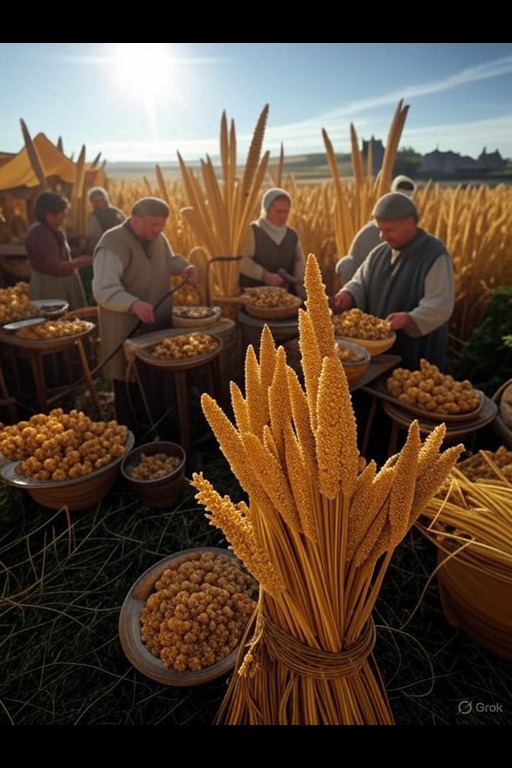
Wild Millet is a resilient grain that flourishes in the expansive Savanna biome. It is a staple resource for various local communities, providing sustenance and supporting trade. Harvesters adeptly gather it seasonally, balancing skill and environmental stewardship to ensure sustainable yields. The grain plays a vital role in culinary traditions and local economies, with many settlements established near its abundant sources.
Universal
Biomes
Politics
Alignments
Races
Resources
Classes
Elevations
Religions
World
No accessible MAPs found.
Biome
Politics
Alignment
Race
Resource
Class
HeightMap
Wild Millet
Detailed Description
Wild Millet is a hardy cereal grain that thrives in the warm, dry conditions of the Savanna. Known for its adaptability, it can grow in less fertile soils where other crops might struggle, making it an invaluable resource for the surrounding ecosystems. The plant develops tall, slender stalks with clusters of tiny seeds that are rich in nutrients, providing a reliable food source for both local wildlife and human inhabitants. Its resilience allows it to withstand periods of drought, which is particularly beneficial in regions where water scarcity can pose challenges to agriculture. Harvesting Wild Millet requires a keen understanding of the seasonal patterns and growth cycles of the plant. Skilled gatherers often wait for the right moment, typically when the seeds reach their peak ripeness, to ensure that the stocks are not depleted and can regenerate for future harvests. This practice is rooted in a deep respect for the land, as communities work to balance their needs with the sustainability of this vital resource. Properly harvested, Wild Millet can be processed into a range of products, contributing significantly to local cuisines and providing economic opportunities for trade. In culinary applications, Wild Millet is cherished for its nutty flavor and versatile use. It can be ground into flour for baking or cooked in its whole form as a side dish. Dried goods and preserves made from the grain are common, allowing communities to store surplus harvests for leaner times. Additionally, its seeds are sometimes transformed into salts and spices, enhancing the flavor of various dishes. The trade of Wild Millet products extends beyond local markets, with various settlements forming trade networks to share their rich bounty with distant lands. This not only fosters economic growth but also promotes cultural exchange as culinary practices spread across regions influenced by the availability of this grain.
Examples
Wild Millet is commonly found in dried goods such as grains and flours, which can be stored for extended periods. Local artisans create preserves and jams utilizing the grain's unique flavor, enhancing dishes and providing a taste of the Savanna. Packaged trade goods often include blends of Wild Millet with spices and salts, catering to diverse culinary preferences. As a staple, it supports not only the nourishment of communities but also their cultural identity and commercial activities.