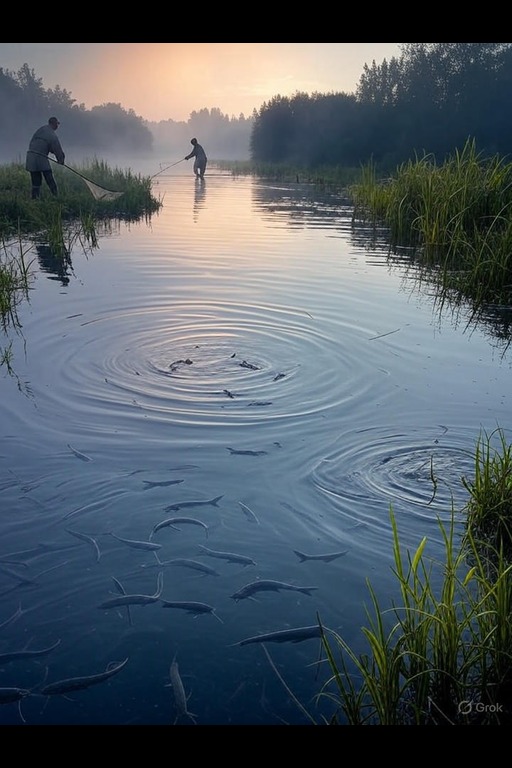
Catfish farming is a sustainable practice that thrives in wetland regions, where the unique aquatic environment provides ideal conditions for growth. These fish are nurtured with steady feed and abundant clean water, and as the seasons shift, farmers either cull their stock or gather mature individuals for harvest. Quick preservation methods, such as smoking, salting, or curing, ensure that the products remain viable for long-distance trade. This practice not only supports local markets but also contributes to the broader food trade and related industries.
Universal
Biomes
Politics
Alignments
Races
Resources
Classes
Elevations
Religions
World
No accessible MAPs found.
Biome
Politics
Alignment
Race
Resource
Class
HeightMap
Catfish Farming
Detailed Description
The art of catfish farming has evolved into a crucial agricultural endeavor, particularly within wetland ecosystems where water is plentiful and the environment conducive to fish growth. Farmers create designated areas, often utilizing natural ponds or constructed waterways, to raise catfish in controlled conditions. Attention is paid to water quality, which is essential for the health of the fish, as clean water influences growth rates and overall quality of the yield. The feed provided is typically a balanced mix designed to optimize growth and ensure that the fish are robust and ready for market when the time comes to harvest. As the seasons progress, farmers carefully monitor the catfish, assessing their health and size. When the desired conditions are met, culling occurs either to manage stock levels or to provide fresh products for local consumption. This cyclical harvesting aligns with natural rhythms, allowing farmers to make the most of seasonal variations while ensuring sustainability. After harvesting, catfish are processed swiftly to maintain freshness, as the methods utilized—smoking, salting, and curing—are designed to not only enhance flavor but also to extend shelf life, making them suitable for transport to distant markets. The products resulting from catfish farming are diverse. Fresh catfish is a staple protein source, while by-products, including cured goods, are popular among those seeking long-lasting provisions. In addition, the industry supports various ancillary practices, including leather processing from the fish skins, which can be turned into durable materials for crafting. The preservation methods employed are not just practical; they are also a reflection of the resourcefulness of the farmers who adapt their techniques to meet market demands while ensuring quality and safety for consumers. Catfish farming thus stands as a testament to effective husbandry, supporting both local and broader food trade networks with its well-rounded contributions to the economy and cuisine. Overall, catfish farming represents a blend of tradition and innovation, where the integration of efficient techniques and resource management ensures a continuous supply of this adaptable fish. Its impact is felt across multiple industries, fostering a thriving environment for both farmers and consumers alike.
Examples
The primary products of catfish farming include fresh fish meat, which is sought after for its flavor and versatility in various culinary applications. In addition to this, farmers may produce dairy products or eggs, depending on the particular practices adopted in their aquaculture systems. Cured goods, such as smoked or salted catfish, are also commonplace, allowing for preservation and extended shelf life. Trade goods derived from catfish, including leather and other by-products, contribute to the overall profitability and sustainability of this farming practice.