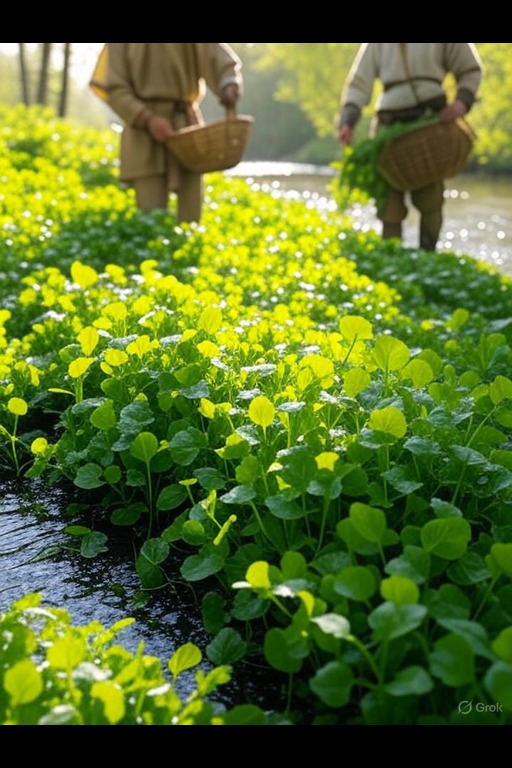
Watercress is a popular aquatic plant cultivated in freshwater environments, often found in wetlands and along the edges of slow-moving streams. This hardy green thrives in nutrient-rich waters and is valued for its peppery flavor and vibrant appearance. Seasonal variations greatly influence both the quality and yield of the crop. Harvested at the right time, it becomes a sought-after ingredient in local cuisines and trade markets alike.
Universal
Biomes
Politics
Alignments
Races
Resources
Classes
Elevations
Religions
World
No accessible MAPs found.
Biome
Politics
Alignment
Race
Resource
Class
HeightMap
Watercress
Detailed Description
The cultivation of watercress takes place primarily in shallow, flowing waters where sunlight can penetrate, encouraging vigorous growth. Farmers often select locations with mineral-rich soils, as these contribute to the plant's distinct flavor profile. Watercress is generally grown in beds that are flooded with clean, cool water, allowing them to absorb nutrients directly from their surroundings. This method not only provides the necessary moisture but also helps prevent the establishment of pests and diseases that can plague other types of crops. Harvesting typically occurs in the early morning, when the leaves are crisp and vibrant, ensuring that the product remains fresh for market distribution. Seasonal changes can affect watercress production significantly. In warmer months, the plant grows rapidly, yielding lush foliage that is perfect for immediate consumption or processing. Conversely, during cooler periods, growth slows, requiring cultivators to adapt their harvesting methods and storage solutions. Recognizing these patterns, farmers often employ preservation techniques such as drying, fermenting, or spicing to extend the life of their harvests. This not only helps to mitigate waste but also enhances the versatility of watercress as an ingredient, making it suitable for various culinary applications throughout the year. Trade networks flourish around watercress, as surplus yields are frequently exchanged with neighboring regions. Caravans transport preserved forms to remote settlements, ensuring that this beloved green remains accessible even in the depths of winter. Culinary artisans experiment with watercress in an array of dishes, from salads to soups, and even as a garnish for more elaborate meals. Its robust flavor and nutritional profile contribute to its enduring popularity among chefs and home cooks alike, solidifying watercress’s status as a staple in both local and distant markets.
Examples
Dried watercress serves as a convenient ingredient, lending its peppery flavor to soups and stews long after the growing season has ended. Fermented varieties can add a unique tang to dishes, providing a probiotic boost while enhancing flavor complexity. Spiced watercress is often used in snack foods or as a seasoning for meats, while candied watercress transforms the plant into a sweet delicacy that surprises the palate. As a versatile product of agricultural ingenuity, watercress embodies the connection between environment, tradition, and cuisine.