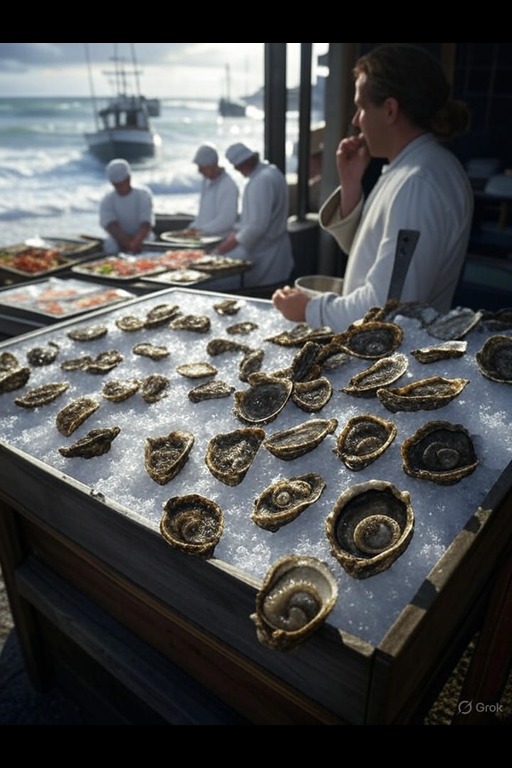
Oysters are cultivated in the depths of the ocean, where they thrive in nutrient-rich waters. Their growth is influenced by the surrounding climate and the unique characteristics of the seabed. Seasonal harvesting methods play a crucial role in determining both their quality and yield, with surpluses often traded with neighboring regions. Preserved forms are particularly sought after, serving as essential provisions for long journeys and winter storage.
Universal
Biomes
Politics
Alignments
Races
Resources
Classes
Elevations
Religions
World
No accessible MAPs found.
Biome
Politics
Alignment
Race
Resource
Class
HeightMap
Oysters
Detailed Description
The cultivation of oysters involves careful management of marine environments, where factors such as water temperature, salinity, and the presence of plankton directly affect their growth and health. Aquaculture practices vary widely, from traditional methods that rely on natural processes to more intensive farming techniques that aim to maximize production. Understanding the delicate balance of the ocean ecosystem is essential for successful oyster farming, as even minor disturbances can impact yield and quality. Farmers often rotate their harvesting sites to allow beds to regenerate, ensuring sustainable practices that support both the industry and the marine environment. Seasonal variations dictate the harvest cycles of oysters, with different times of the year yielding distinct flavors and textures. As temperatures fluctuate, so too does the nutritional content of the oysters, influencing their taste profile. Chefs and culinary artisans take great care in selecting oysters that meet specific seasonal characteristics, enhancing their dishes with these delicate seafood treasures. The ability to cultivate and harvest oysters at their peak is a skill honed through generations, deeply rooted in tradition and local knowledge. Trade in oysters extends beyond mere sustenance; they are a symbol of luxury and refinement in many regions. Preserved methods, such as smoking, salting, and pickling, allow oysters to be enjoyed throughout the year, even during seasons when fresh produce is scarce. These preserved forms are particularly valued by caravans and traders, who seek durable provisions that endure lengthy journeys. The culinary versatility of oysters further contributes to their popularity, as they are transformed into stews, oils, and various gourmet dishes that showcase their unique briny flavor. The industry surrounding oysters not only supports local economies but also fosters a connection between communities through the sharing of resources and culinary heritage.
Examples
Various products derived from oysters exemplify their culinary versatility. Smoked oysters offer a rich, savory addition to dishes, while salted varieties are prized for their long shelf life and intense flavor. Pickled oysters serve as a tangy complement to appetizers, while hearty oyster stew warms the soul on colder days. Oyster oil is often used in gourmet cooking, providing a unique taste that enhances a variety of dishes.