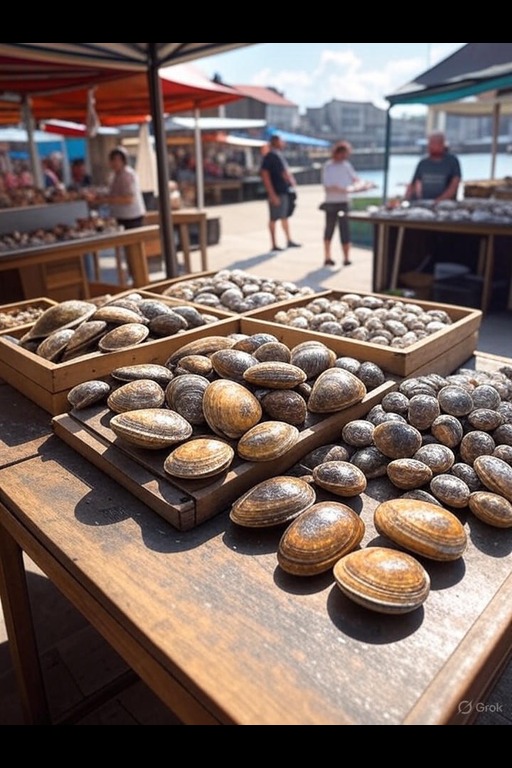
Clams are cultivated or harvested in various marine environments, thriving in both oceanic and freshwater habitats. Their quality and yield are influenced by climate, soil composition, and traditional farming practices. Seasonal harvesting methods play a significant role in determining the freshness and flavor of clams, making them a sought-after delicacy. Surpluses are often traded with neighboring regions, and preserved forms are particularly valued for long journeys and winter storage.
Universal
Biomes
Politics
Alignments
Races
Resources
Classes
Elevations
Religions
World
No accessible MAPs found.
Biome
Politics
Alignment
Race
Resource
Class
HeightMap
Clams
Detailed Description
Clams are bivalve mollusks commonly found in sandy or muddy substrates of both fresh and saltwater environments. They thrive in a range of conditions, adapting to the nuances of their ecosystem, which can greatly affect their growth and flavor profile. Farmers and harvesters often employ traditional techniques, passed down through generations, to cultivate these marine creatures. The methods used vary with the seasons, with some practices allowing for a more sustainable yield while others prioritize immediate harvests, thus influencing the overall quality of the clams produced. The culinary versatility of clams is one of their most appealing aspects. They can be enjoyed raw, steamed, or incorporated into a variety of dishes, such as hearty stews and light broths. Preservation techniques, including smoking, salting, and pickling, have been refined over time, allowing clams to be stored for extended periods. This adaptability not only contributes to their shelf life but also enhances their flavor, making them a popular choice for both local consumption and long-distance trade. Travelers and merchants often rely on preserved clams as a reliable source of nutrition during arduous journeys, reinforcing their importance in trade networks. Trade routes often flourish where clam farming is prominent, as neighboring regions seek high-quality produce to complement their own food sources. The exchange of clams, in both fresh and preserved forms, stimulates local economies and fosters cultural exchanges. As such, clams are not only a staple in many diets but also a key component of community identity, binding people together through shared culinary experiences. Through careful management of farming practices and a deep understanding of environmental factors, communities continue to cultivate clams, ensuring a sustainable resource for future generations.
Examples
Clams find their way into a multitude of dishes, showcasing their adaptability to various culinary traditions. Smoked clams are a delicacy enjoyed as a savory snack, while salted clams serve as a flavorful addition to rice and grain-based meals. Pickled clams, with their tangy zest, can brighten up any plate, and clam stew becomes a comforting dish during colder months. Additionally, clam oil, extracted from the meat, is prized for its rich, marine flavor and is often used in dressings and marinades.