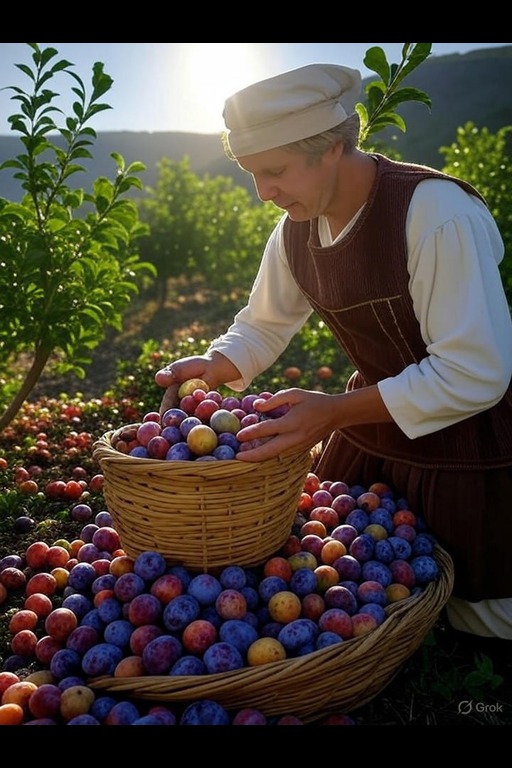
Plums are cultivated in temperate dry grasslands and lush deciduous forests, their growth influenced by local climate and soil conditions. These fruits embody the essence of seasonal farming practices, where careful attention to timing and methods impacts both quality and yield. The surplus generated by orchards often finds its way to neighboring regions, establishing a network of trade and culinary connection. Preserved plums are particularly valued for their utility during long journeys and the winter months.
Universal
Biomes
Politics
Alignments
Races
Resources
Classes
Elevations
Religions
World
No accessible MAPs found.
Biome
Politics
Alignment
Race
Resource
Class
HeightMap
Plums
Detailed Description
The cultivation of plums thrives in regions characterized by temperate dry grasslands and moist deciduous forests, where the balance of sun and rainfall fosters the development of this favored fruit. The trees flourish in well-drained soils, with their roots drawing sustenance from the earth while benefiting from the seasonal variations that enhance flavor and sweetness. Farmers meticulously tend to their orchards, tailoring techniques to suit the climate and the specific variety of plum grown, allowing them to produce fruits that are both delectable and resilient. The combination of proper care and environmental conditions often results in bountiful harvests that can exceed local consumption needs, leading to the establishment of vibrant trade networks. Harvest time is a celebration, with the plums bursting forth in hues of purple, yellow, and red, their skins glistening in the sunlight. The meticulous selection process ensures that only the ripest and most flavorful plums are gathered, ready to be transformed into various culinary delights. While fresh plums are enjoyed as a succulent snack, preserving them through drying, canning, or crafting into jams and juices extends their life and versatility. The process of preserving captures the essence of the harvest, allowing the taste of summer to be savored during the colder months. Trade caravans often make use of preserved plums, recognizing the practicality of these compact, nutrient-rich delights during long journeys. Dried plums, in particular, are prized for their durability and energy-boosting properties, making them a staple in the supplies of travelers and merchants alike. The diverse uses of plums extend into the culinary world, where they are transformed into fine jams, rich wines, and delightful candied treats, each product showcasing the fruit's natural sweetness and character. As such, plums embody not just agricultural wealth but also a cultural tapestry woven through shared culinary traditions and trade connections.
Examples
Common products derived from plums include dried plums, which offer a chewy texture and concentrated sweetness, ideal for snacking or baking. Plum jams capture the fruit's vibrant essence, providing a delightful spread for breads and pastries. For those seeking indulgence, candied plums present a rich, sugary treat, while plum wine delivers a unique flavor profile enjoyed in various social gatherings. Additionally, plum juice serves as a refreshing beverage, perfect for quenching thirst during warm days.