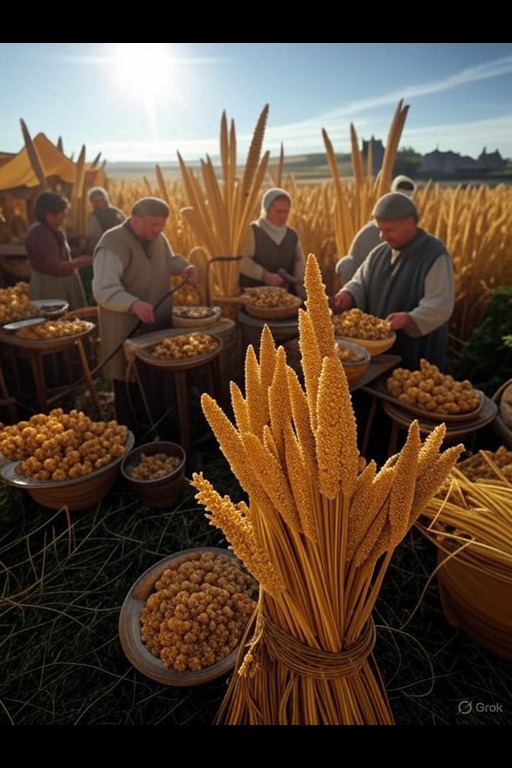
Millet is a versatile grain cultivated in diverse landscapes such as savannas and grasslands. Its growth is influenced by seasonal changes, soil quality, and traditional farming practices. Renowned for its hardiness, millet can thrive in less fertile conditions, making it a staple in many regions. Surpluses of this grain are often traded, with preserved forms sought after for long journeys and winter supplies.
Universal
Biomes
Politics
Alignments
Races
Resources
Classes
Elevations
Religions
World
No accessible MAPs found.
Biome
Politics
Alignment
Race
Resource
Class
HeightMap
Millet
Detailed Description
The cultivation of millet occurs in various environments, particularly where warm climates and open spaces prevail. This grain flourishes in well-drained soils and can endure periods of drought, which makes it a reliable option for farmers in regions subject to climatic instability. Its resilience allows it to be sown in a variety of seasons, adapting to local agricultural practices that maximize yield based on annual weather patterns. The interplay between the cultivation techniques and the natural environment plays a critical role in determining the quality of the harvested grain. As millet matures, it produces clusters of small seeds that are harvested when fully ripe. These seeds are not only essential for food but also serve as a basis for a variety of products. The grain can be ground into flour, which is then utilized in baking, creating various types of bread and crackers that cater to different tastes and dietary needs. Additionally, millet can be cooked as porridge, providing a nutritious and hearty meal option. Its fermentation leads to delightful beverages, including millet beer, widely appreciated for its unique flavor profile. The trade of millet and its by-products forms a vital part of local economies. Farmers often exchange surplus grain for other goods, fostering connections between communities. Caravans traveling long distances prize preserved millet, as it retains its nutritional value and sustains travelers during extended journeys. This adaptability and longevity of millet make it not only a dietary staple but also an integral part of cultural and economic exchanges across regions. As such, its cultivation and use reflect the intricate relationship between agriculture, community, and sustenance.
Examples
Common products derived from millet include millet flour, which is essential for baking and cooking various dishes. Millet bread is a popular alternative for those seeking gluten-free options, while millet porridge serves as a warming breakfast choice. In addition to these, millet beer is brewed for celebration and daily enjoyment, showcasing the versatility of the grain. Millet crackers provide a convenient snack, appealing to a wide range of consumers. Each of these products highlights the grain's adaptability and importance in diverse diets.