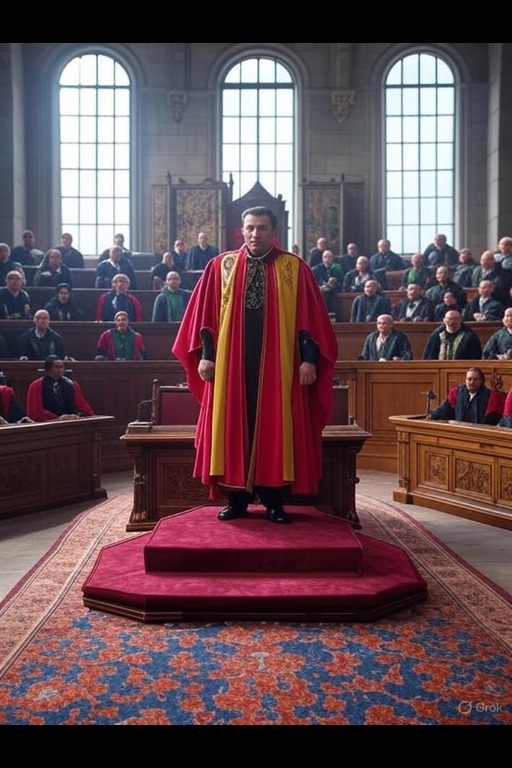
This provincial structure centers on a council-elected governor, balancing local autonomy with oversight from higher authorities, fostering a unique blend of community involvement and external governance.
Universal
Biomes
Politics
Alignments
Races
Resources
Classes
Elevations
Religions
World
No accessible MAPs found.
Biome
Politics
Alignment
Race
Resource
Class
HeightMap
Republic
Detailed Description
In a republican system, the provincial governance is often characterized by a council elected by the populace, which serves as both a legislative body and a check on the power of the governor. The governor, typically elected for a set term, wields executive powers and is responsible for implementing laws, managing provincial resources, and representing the province in interactions with the overarching authority. The council's composition can vary, with representatives elected from various districts, ensuring that diverse voices are heard in the decision-making process. Regular public assemblies may be held, allowing citizens to directly engage with their leaders, a practice that heightens accountability and fosters civic participation. Under different parent state types, the dynamics may shift. In a kingdom, for example, the governor might derive their authority from the monarch, which can lead to a more hierarchical structure where provincial autonomy is limited. Alternatively, in a federation, provinces often enjoy a greater degree of autonomy, allowing them to enact local laws and maintain distinct cultural identities, while still adhering to the overarching federal framework. In a theocracy, religious leaders may play a significant role in governance, intertwining faith with law, which can influence the electoral process and the types of policies enacted. Taxation practices typically reflect the needs of both local and central governments, with provinces often collecting taxes that are partially remitted to the higher authority. This financial relationship can lead to conflicts over resource allocation, as locals may believe their contributions should be used primarily for local needs. Military obligations can also arise, with provinces expected to provide recruits or resources to support the broader defense strategy of the state, creating a sense of shared responsibility but also potential resentment if perceived as overreach. Daily life in such a provincial structure is marked by an intricate blend of local pride and the pressures of external governance. Citizens may feel empowered by their ability to influence local policies, yet they often navigate the complexities of higher authority directives that can limit their actions. The balance of power lies in the hands of the electorate, fostering a political climate where local issues can rise to prominence, yet the influence of external forces cannot be ignored, leading to a rich tapestry of social interactions and political maneuvering within the province.
Examples
A provincial council in a federation debates new trade agreements with neighboring territories. A duchy within a kingdom struggles with the balance of power as the monarch attempts to impose stricter laws. A governorate in an empire faces resistance from local factions demanding more autonomy. An eparchy in a theocracy holds regular spiritual assemblies that influence local governance. A province in a republic grapples with budget cuts that threaten public services and local projects. A territory governed by a council prepares to elect a new leader amidst growing unrest over external taxation policies.