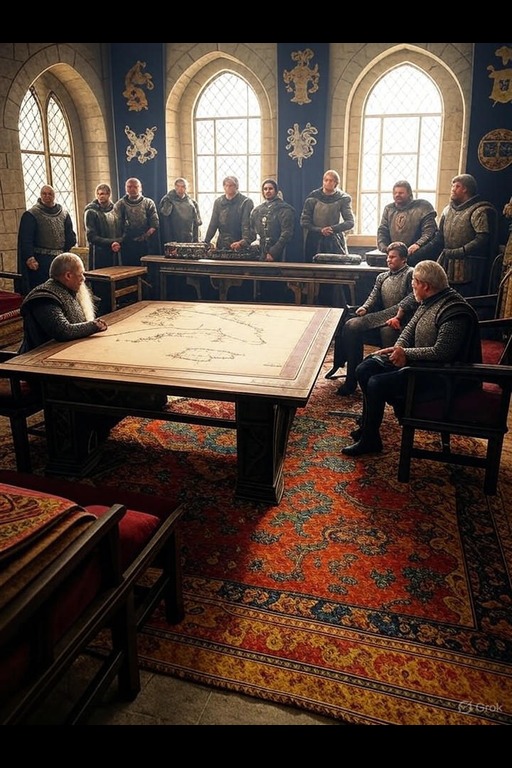
A barony operates under a feudal system where a baron wields power through land ownership, hereditary succession, and vassal obligations, shaping the social and political landscape.
Universal
Biomes
Politics
Alignments
Races
Resources
Classes
Elevations
Religions
World
No accessible MAPs found.
Biome
Politics
Alignment
Race
Resource
Class
HeightMap
Barony
Detailed Description
In a barony, governance is typically centered around the authority of the baron, who holds land in fief from a higher lord, often a king or emperor. The baron is responsible for maintaining order, enforcing laws, and collecting taxes from the serfs and vassals residing on their lands. Power is derived from the control of the land and the loyalty of those who live upon it; thus, the baron's ability to govern effectively hinges on their relationship with both nobility and commoners. Vassalage is common, where lesser nobles swear fealty to the baron in exchange for protection and the right to govern smaller parcels of land, forming a layered hierarchy of loyalty and obligation within the barony’s structure. This system fosters a strong sense of local identity, but can lead to conflicts over land rights and allegiances when vassals pursue their ambitions or when external pressures arise from rival baronies or centralized authorities. Succession in a barony usually follows a hereditary principle, where the title and land pass down to the baron’s heirs, solidifying family ties and continuity of governance. Should a baron die without an heir, a council of vassals may convene to select a new leader, reflecting the barony's autonomy under various overarching political structures. In kingdoms, baronies may have some degree of self-governance, but are still subject to the king’s laws. In federations, baronies could enjoy more independence, but often face challenges when balancing regional interests against federal mandates. Religious institutions might also play a role, with clerics often advising the baron or receiving land in return for their spiritual services, intertwining faith with governance. Daily life for subjects within a barony can vary significantly depending on the baron’s disposition: benevolent rulers may foster prosperity and social programs, while tyrants might impose heavy taxes and harsh laws. Such disparities often influence the loyalty of vassals and the morale of the populace. Common practices might include local markets, festivals, and courts presided over by the baron or their appointed officials, underscoring the barony as a focal point of community life. However, the constant threat of external conflicts or internal disputes can create an undercurrent of tension that affects the everyday experiences of those living under a baron’s rule.
Examples
A barony within a kingdom faces pressure from royal decrees aimed at centralizing power. An imperial barony contends with rival houses vying for influence over its resource-rich lands. A vassal lord in a federation seeks to expand their territory, leading to territorial disputes with neighboring baronies. In a theocratic empire, a baron must navigate the demands of religious authority while managing secular affairs. A barony in a republic wrestles with local governance versus mandates from the central council. A border barony often finds itself fortified against incursions from hostile territories, relying on the loyalty of its vassals.