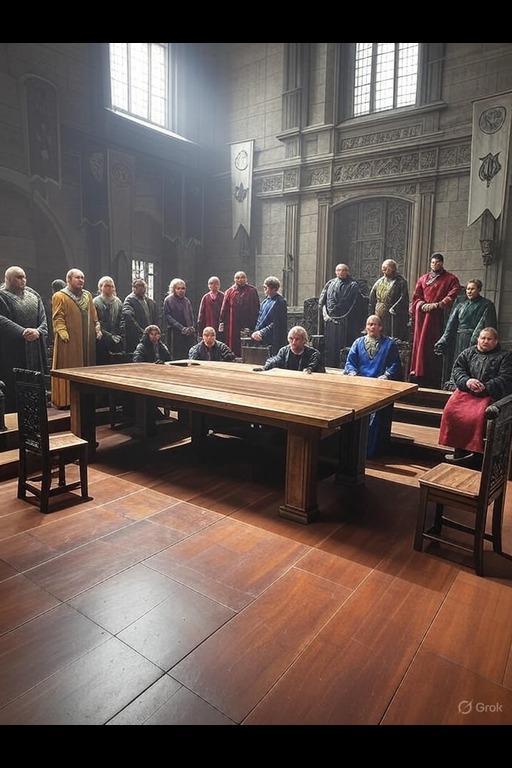
This political structure features a local governance system where authority is typically shared between appointed officials and local councils, providing a unique blend of oversight and autonomy.
Universal
Biomes
Politics
Alignments
Races
Resources
Classes
Elevations
Religions
World
No accessible MAPs found.
Biome
Politics
Alignment
Race
Resource
Class
HeightMap
Area
Detailed Description
In this governance model, power is often held by a governor or similar high-ranking official, who may be appointed by a central authority or elected by local constituents. Their authority is supported by a council comprised of representatives from various local factions, guilds, or communities. This council assists in decision-making and ensures that diverse voices within the province are represented. The exact nature of these representatives can vary widely, ranging from noble houses to merchant guilds or religious sects, depending on the broader political context of the parent state. For instance, under a monarchy, the governor's power might be tightly controlled, while in a federation, they may enjoy greater autonomy and discretion in local matters. Succession of power could occur through appointment from the center, popular elections, or hereditary claims, depending on existing traditions and laws. This can lead to conflicts among various factions within the province, especially when the central authority attempts to impose reforms or changes that threaten local interests. The daily lives of the populace are shaped by the rules and decrees enacted by both the governor and the council, which can include taxation policies, civil regulations, and regional laws that reflect the unique cultural and social fabric of the area. Taxation is typically grounded in local economic activities, with the council playing a critical role in determining rates and methods, which can lead to tensions if deemed excessive or poorly managed. The military presence may vary, with local militias or forces often established to maintain order and protect the region, sometimes loyal to the governor instead of the central authority. Likewise, religious institutions may influence governance, especially in theocracies, where spiritual leaders hold significant sway over civic matters. Ultimately, residents often navigate a complex web of loyalties and obligations, feeling the impact of both local governance and wider political dynamics. In this system, the balance of power can shift dramatically based on external pressures or internal strife, creating an environment ripe for intrigue, rebellion, or reform. The unique challenges faced by the various factions may lead to a vibrant political scene, where alliances shift, and new leaders emerge, reflecting the ever-evolving tapestry of local governance.
Examples
A barony within a kingdom struggles to maintain its traditional privileges against an encroaching central authority. A district in an empire holds a festival to celebrate its unique cultural identity while tensions simmer over taxation disputes. A federation's province organizes a rebellion to seize greater autonomy from its central government. An eparchy in a theocracy must balance its spiritual duties with the practical needs of its populace. A frontier territory in a republic faces pressure from both local warlords and national reforms aimed at unifying governance.