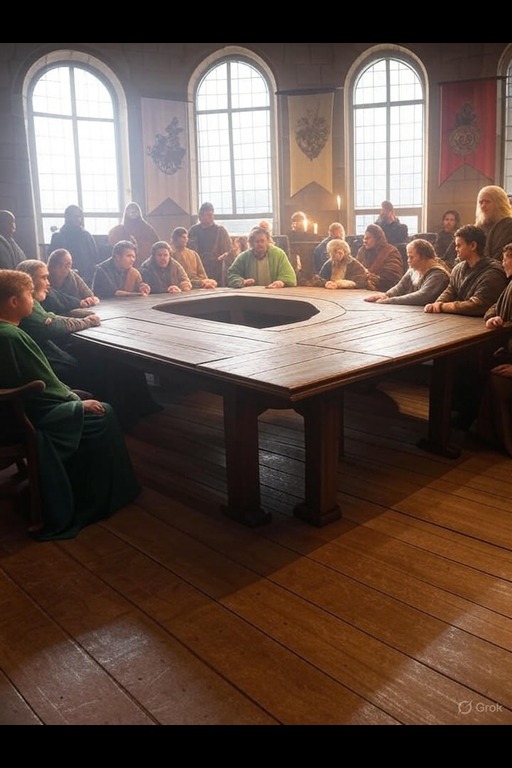
A Union political structure characterized by a parliamentary system, where power is shared between a central authority and regional councils, blending tradition with representative governance.
Universal
Biomes
Politics
Alignments
Races
Resources
Classes
Elevations
Religions
World
No accessible MAPs found.
Biome
Politics
Alignment
Race
Resource
Class
HeightMap
United Kingdom
Detailed Description
In a Union political structure, power is typically distributed between a central governing body and various regional councils or assemblies. This framework allows for a balance between local autonomy and national oversight, enabling regions to address their unique cultural and economic needs while still adhering to overarching laws and policies. The central authority often consists of an elected assembly headed by a prime minister or equivalent leader, who is tasked with forming a cabinet that implements national policies. The influence of the central body can fluctuate, often depending on prevailing political climates, regional demands, and the effectiveness of leadership. Succession in a Union often relies on democratic processes, where leaders are elected either directly by the populace or through representatives in regional assemblies. This system fosters a culture of political participation, although it can also lead to tensions as different regions vie for influence and resources. In practice, local leaders may find themselves torn between the expectations of their constituents and the directives of the central government, leading to conflicts that can manifest in protests, lobbying efforts, or even calls for greater autonomy. Typical institutions within this governance structure include regional councils that serve as localized legislative bodies, allowing for community representation in the decision-making process. These councils are often composed of elected officials who are responsible for enacting local laws, managing public services, and overseeing taxation at the regional level. Judicial systems operate independently, upholding laws that reflect both national and regional interests. This duality can create a complex legal landscape, where discrepancies between laws can lead to confusion and disputes among citizens. Socially, life under a Union political structure can vary widely based on one’s location. Residents in more urbanized centers may enjoy greater access to services and representation, while those in remote areas might feel neglected or underrepresented. The presence of regional pride can foster community engagement but may also lead to isolationist sentiments, especially if local interests clash with national policies. Furthermore, the roles of military and religious institutions can intertwine with governance, either bolstering national unity or exacerbating regional divisions, depending on the context of their involvement. This delicate balance shapes the daily experiences of citizens, influencing everything from education to public safety, and can define the character of the Union itself.
Examples
A council of regional lords debates a tax proposal that threatens to spark protests among local farmers. A charismatic leader rises in a remote province, rallying support for greater autonomy from the central government. A scandal involving a prime minister's advisor reveals deep-seated corruption within the central authority. The annual festival of a major city showcases local customs, but tensions simmer as council representatives argue over funding. A military garrison in a border region serves as a point of contention between local leaders and the national government. A religious figure emerges as a popular candidate for regional leadership, challenging the traditional power structures.