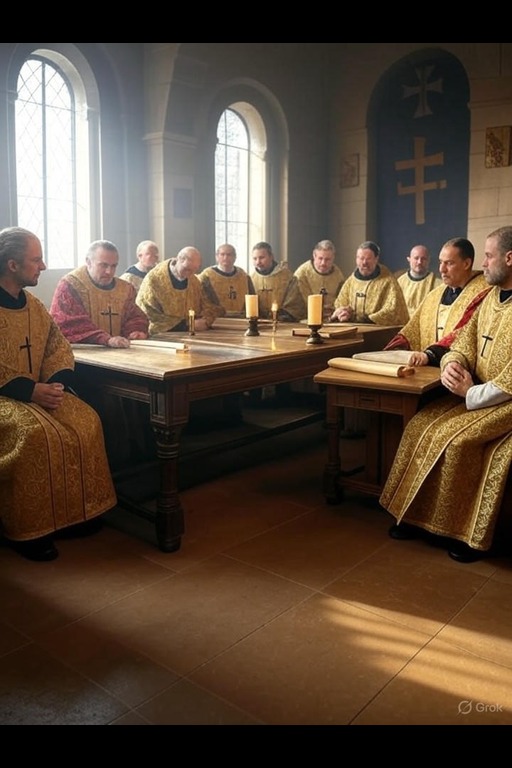
A diocese operates as a theocratic governance structure where religious leaders hold significant authority, shaping laws and societal norms based on spiritual doctrines.
Universal
Biomes
Politics
Alignments
Races
Resources
Classes
Elevations
Religions
World
No accessible MAPs found.
Biome
Politics
Alignment
Race
Resource
Class
HeightMap
Diocese
Detailed Description
In a diocese, power resides primarily with a high-ranking cleric or a council of religious leaders who interpret sacred texts and doctrine to guide governance. These figures often claim divine guidance in their rulings, fostering a strong connection between the church and the state. Succession typically follows a hereditary or election-based system among the clergy, where the new leader is chosen from within the ranks of established religious authorities. This transition may involve a ceremonial confirmation process, reinforcing the diocese's commitment to its spiritual foundations while ensuring continuity in governance. The legitimacy of the ruling authority hinges on public faith in their spiritual credentials, which can influence their power dynamics significantly. The institutions within a diocese often include councils formed of various clergy members who are responsible for different aspects of governance, such as law enforcement, education, and tax collection. These councils play a crucial role in interpreting and enforcing religious laws, which often overlap with civil regulations. Taxation practices can vary, but they are frequently tied to religious obligations, with citizens providing tributes or offerings as a form of support for the church's activities and social programs. Citizens may experience a blend of spiritual and legal obligations, as compliance with religious mandates often coincides with fulfilling civic duties. While the diocese can create a unified sense of purpose among its followers, challenges arise from dissenting views. Conflicts may emerge when citizens interpret doctrines differently or when neighboring regions challenge the authority of the diocese, leading to tensions and, at times, open disputes. The daily life of subjects under a diocese is often characterized by a strong communal identity and shared values, but it can also lead to restrictions on personal freedoms, especially when conformity to religious doctrine is enforced. Despite these restrictions, many find solace and meaning in the guidance provided by their leaders, resulting in a complex relationship between governance, faith, and personal agency.
Examples
A local priest's decision to impose stricter interpretations of doctrines sparks unrest among townsfolk. An ambitious acolyte seeks to manipulate succession laws to elevate their standing. Merchants are required to pay tithe directly to the church, leading to resentment among the lower classes. A rival diocese attempts to convert the citizens of a neighboring territory, igniting a theological war. A council of elders debates the morality of new laws that restrict trade on holy days.