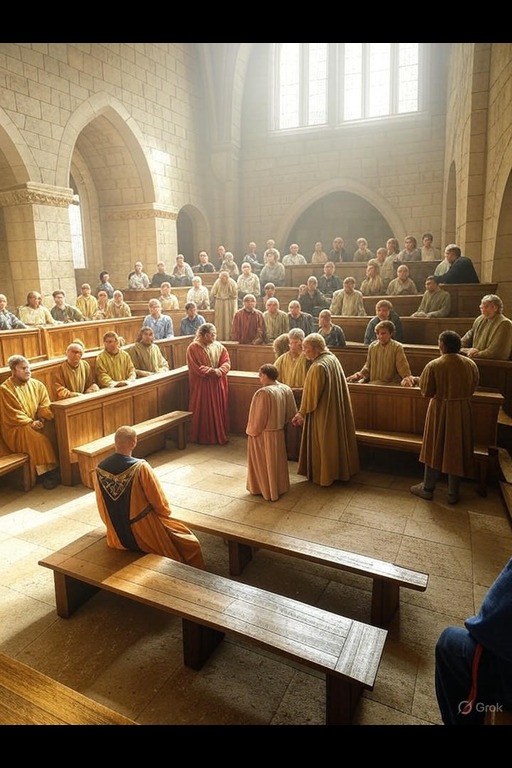
A Free City operates as a self-governing municipality with significant autonomy, emphasizing civic participation and economic commerce while managing its own laws and defense.
Universal
Biomes
Politics
Alignments
Races
Resources
Classes
Elevations
Religions
World
No accessible MAPs found.
Biome
Politics
Alignment
Race
Resource
Class
HeightMap
Free City
Detailed Description
In a Free City, governance is typically centered around an elected council, representing various sectors of the population such as merchants, artisans, and scholars. The council holds significant power, often making decisions on trade regulations, public services, and local taxation. Leadership often rotates among council members or is determined by popular vote, ensuring a dynamic and responsive political atmosphere. The city's autonomy allows it to forge its own alliances and manage its defenses, with local militias often organized to protect against external threats. This model encourages civic pride and engagement but can lead to tensions if factions within the council clash over competing interests. Citizens generally experience a high level of involvement in governance, with public forums and assemblies where individuals can voice opinions and propose changes. However, the emphasis on local autonomy can also spark conflicts with surrounding territories or central authorities, especially regarding trade routes and jurisdictional boundaries. Taxation is usually based on commerce, with businesses contributing a percentage of their profits to support local infrastructure and public services. This system can foster economic growth and innovation but may also create disparities if resources are unevenly distributed among the populace. Socially, the Free City often cultivates a rich tapestry of culture and ideas, attracting thinkers and traders from afar. Its laws adapt to the needs of its citizens, resulting in a legal system that, while flexible, sometimes lacks uniformity. This can lead to confusion or exploitation, particularly if the wealthier classes manipulate regulations to their advantage. The presence of guilds and trade unions bolsters workers' rights but can also lead to strife when they push too hard against the council's decisions. The Free City's military is usually composed of volunteers and local defenders, reflecting its population's commitment to self-governance and protection of their shared interests. In essence, life in a Free City is characterized by a blend of opportunity and challenge. The successes of its governance can be seen through the flourishing of commerce and culture, while failures may reveal fractures within its political landscape, leading to intrigue and potential conflict in the lives of its citizens.
Examples
A vibrant marketplace thrives under the watchful eye of a guild council that frequently debates trade tariffs. A sudden influx of refugees prompts a heated council meeting about resource allocation. Tensions rise as an influential merchant seeks to sway council votes in favor of a local trade monopoly. A popular festival draws citizens together but reveals underlying social divisions when rival factions clash. A charismatic leader emerges, rallying support for reforms aimed at improving living conditions in the poorer districts.