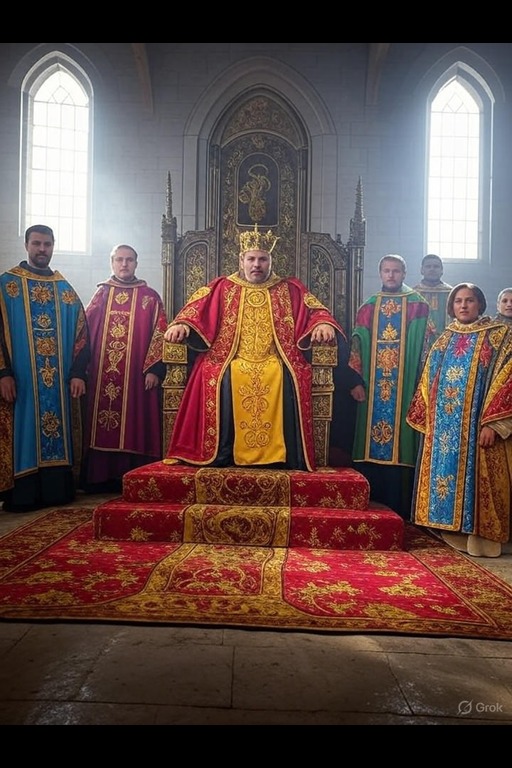
In a monarchy structured as a kingdom, power is centralized under a single monarch whose authority is often legitimized by tradition, divine right, or conquest, creating a distinct hierarchy.
Universal
Biomes
Politics
Alignments
Races
Resources
Classes
Elevations
Religions
World
No accessible MAPs found.
Biome
Politics
Alignment
Race
Resource
Class
HeightMap
Kingdom
Detailed Description
In a kingdom, governance typically revolves around the monarch, who holds supreme authority and often governs with a combination of decrees and tradition. The monarch's power may be inherited, often passing from parent to child in a predetermined line of succession, though rival factions can lead to disputes over the throne. In some cases, the monarch may appoint a council of nobles or advisors to assist in ruling, but the final decision-making power remains with the crown. These councils can vary in influence, with some being mere advisory bodies while others hold substantial power, especially during periods of regency or minority rule when the monarch is too young or incapacitated to govern effectively. The legitimacy of the monarch's rule is often reinforced through rituals, such as coronations, that emphasize their divine right and the historical lineage of the throne. The laws of the kingdom are typically a blend of royal decrees and customary practices, with the monarch holding the power to enact or abolish laws at will. Taxation is commonly imposed on the populace to fund the royal court, military endeavors, and public works, leading to potential unrest if the burden is perceived as excessive. Those in positions of nobility may collect taxes from their vassals or serfs, leading to varied experiences of oppression and privilege among different social classes. The military often plays a crucial role in enforcing the monarch's will, providing protection against external threats, and maintaining internal order. In religiously inclined kingdoms, the church may also play a significant role in governance, supporting the monarch's authority and influencing laws related to morality and public conduct. Daily life in a kingdom can vary widely based on one's social standing and proximity to the crown. Nobles may lead lives of relative luxury, engaging in court politics and managing their estates, while common folk often contend with the whims of their local lords. Famine, war, or royal decrees can lead to instability, inciting revolts or changes in local governance. The experience of subjects varies greatly depending on the strength of the monarch's rule; a benevolent and just ruler may foster prosperity, while a tyrant can instill fear and dissent among the populace. The royal court serves as a center of culture and politics, where alliances are formed and betrayals plotted, shaping the kingdom's future in ways that ordinary citizens may only glimpse from a distance.
Examples
A powerful duke seeks to undermine the monarch while pretending loyalty, instigating a web of intrigue at court. A peasant uprising erupts as a tax increase is imposed following a failed war. A royal decree mandates the establishment of a guild for all artisans in the capital, sparking debate among local craftspeople. A distant province claims independence, challenging the monarch’s authority and risking civil war. The queen's unexpected death leaves a power vacuum, leading to fierce competition among potential heirs.